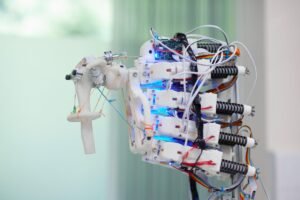

Prophetic AI has officially launched its commercial line of neurotechnology headbands designed to induce and control lucid dreaming via focused ultrasound. These devices, Dual and Phase, aim to bridge the gap between sleep and conscious awareness, transforming the subconscious into a programmable experience, letting you to simulate your dreams.
Most of us spend nearly a third of our lives asleep, navigating involuntary narratives that often vanish the moment we wake up. Traditionally, the rare ability to become aware within a dream and control its outcome was a skill that took years of dedicated psychological practice to master.
In the modern era, the line between science fiction and consumer technology is growing increasingly thin. Instead of relying solely on mental exercises, new wearable technology aims to interface directly with our neural pathways to unlock the hidden potential of our sleeping hours.
The Dawn of Lucid Dreaming as a Service
Prophetic AI, a startup making significant waves in the neurotechnology sector, has unveiled its vision for the future of rest. By introducing its new headbands, the company is positioning the concept of lucid dreaming—the state of being aware that one is dreaming while still asleep—as a consumer service.
This move transitions the technology from the realm of experimental prototypes into a commercial product line designed for those who wish to explore their subconscious with intention.
The entry-level model, known as Prophetic Dual, is priced at $449. This device uses a specialized focusing system to target the prefrontal cortex, which is the area of the brain responsible for self-awareness and decision-making.
By modulating neural activity during the Rapid Eye Movement (REM) stage of sleep, the headband seeks to spark consciousness within the dream without waking the user.
Advanced Exploration with the Phase Model
For the more dedicated enthusiasts, whom the company refers to as oneironauts, the Prophetic Phase offers a premium experience priced at $1,299, or approximately ₹1.1 to ₹1.2 Lakh depending on regional adjustments and taxes. This higher-end model provides a more sophisticated level of control over the dreaming experience through precise spatial modulation.
Key features of the Phase model include:
- Spatial Ultrasound Control: Allows for more accurate delivery of signals to specific neural regions.
- Enhanced Perception: Designed to offer finer control over how a user perceives their dream environment.
- Improved Recall: Aims to strengthen the memory of the dream once the user wakes up.
- Premium Engineering: Built with advanced sensors to provide a more seamless interface between the hardware and the brain.
The Science of Focused Ultrasound
The underlying technology powering these headbands is Transcranial Focused Ultrasound (TUS). This is a non-invasive method that uses sound waves to stimulate brain activity at a depth and precision that traditional electrical stimulation often struggles to reach.
Prophetic AI claims to have achieved a massive reduction in the cost of this technology, bringing it from expensive research laboratories to a form factor that can be worn comfortably in bed.
By targeting the prefrontal cortex during REM sleep, the device essentially reminds the brain to stay awake while the rest of the body remains in a restorative state. This creates a unique hybrid state of consciousness where the laws of physics can be rewritten by the dreamer’s will.
Safety, Ethics, and the Road Ahead
While the promise of directing your own nightly adventures is enticing, the scientific community remains cautious. Several experts have raised questions regarding the long-term effects of regular neural stimulation during sleep, which is a critical period for brain recovery and memory consolidation.
There are also broader psychological considerations about how constant manipulation of dream states might affect a person’s waking life and mental health.
Beyond the biological concerns, there is a growing conversation about the privacy of the subconscious. As we begin to wear devices that monitor and influence our brainwaves, the security of our internal thoughts and the potential for commercial interference become vital topics for future regulation.
Current Timeline and Availability
If you are eager to start your journey as a dream director, you will need a bit of patience. Prophetic AI has outlined a rollout schedule that prioritizes safety and manufacturing precision:
- Prophetic Dual: Shipments are expected to begin toward the end of 2026.
- Prophetic Phase: The premium model is slated to reach consumers by mid-2027.
As these devices eventually reach the hands of users, they will serve as a fascinating case study in how far we can push the boundaries of human consciousness through technology.
Key Takeaways
- Prophetic AI has launched the Dual ($449) and Phase ($1,299) headbands to enable controlled lucid dreaming.
- The devices utilize Transcranial Focused Ultrasound (TUS) to target the prefrontal cortex during the REM sleep cycle.
- Lucid dreaming is transitioned from a psychological skill into a “consumer service” through wearable neurotechnology.
- Safety and privacy concerns regarding long-term neural stimulation and subconscious data remain key points of discussion.
- Commercial availability is set for late 2026 for the Dual model and mid-2027 for the Phase model.
Join our community by subscribing to our Weekly Newsletter to stay updated on the latest AI updates and technologies, including the tips and how-to guides. (Also, follow us on Instagram (@inner_detail) for more updates in your feed).
(For more such interesting informational, technology and innovation stuffs, keep reading The Inner Detail).