
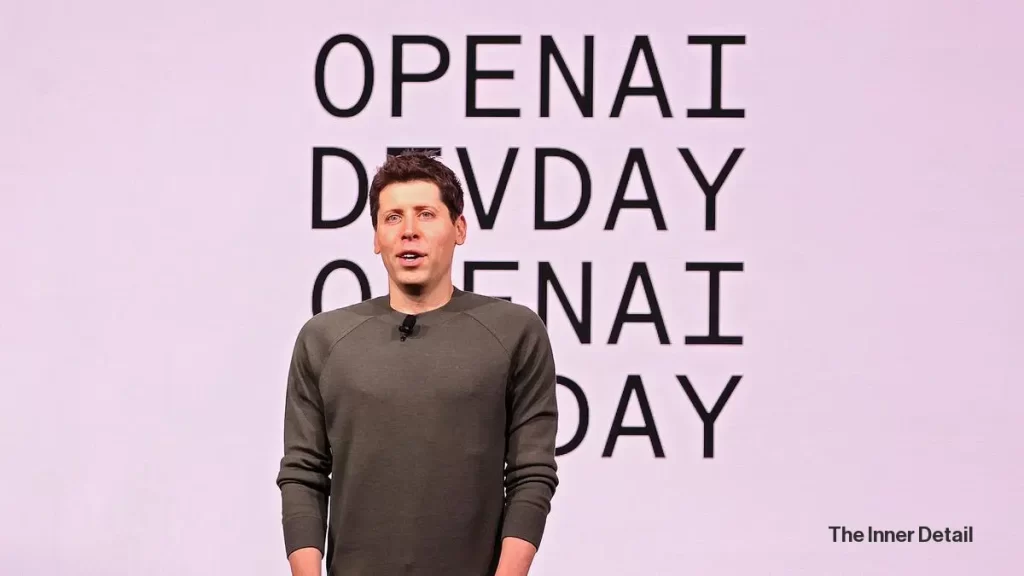
OpenAI has officially unveiled its latest generation of artificial intelligence, the GPT-5.6 family, introducing three distinct models: Sol, Terra, and Luna. This strategic release aims to advance frontiers in scientific research, cybersecurity, and complex software engineering through a phased, secure deployment.
Think of this rollout like the release of a new high-performance car engine series. Just as an automaker might release a flagship engine for track performance, a balanced version for daily highway driving, and an efficient compact engine for urban travel, OpenAI is segmenting its new technology to suit different operational needs.
In the tech world, this isn’t just about making things faster; it is about creating a specialized toolkit. While previous AI models served as general-purpose assistants, the GPT-5.6 family acknowledges that the needs of a research lab investigating molecular biology differ vastly from the needs of a developer building a cost-sensitive web application. By offering a tiered model structure, OpenAI is refining how intelligence is delivered to developers and organizations.
Key Takeaways
- The GPT-5.6 series features three specialized models: Sol (flagship), Terra (balanced), and Luna (efficiency champion).
- Sol sets new benchmarks in software engineering and cybersecurity while demonstrating a 9% improvement in biological research over GPT-5.5.
- The rollout is currently restricted to invitation-only access to ensure rigorous safety and usability testing before a wider release.
- New prompt caching features offer significant cost savings and predictability for developers through explicit cache breakpoints.
Meet the New Trio: Sol, Terra, and Luna
The GPT-5.6 series is built to address specific performance and economic profiles. Each model serves a distinct purpose within the developer ecosystem:
GPT-5.6 Sol: This is the flagship powerhouse. Engineered for advanced reasoning and long-horizon agentic work, it is designed to handle the most complex tasks, such as multi-step scientific research and intricate software engineering workflows.
GPT-5.6 Terra: Positioned as the balanced option, Terra offers competitive performance that rivals its predecessors while operating at a significantly lower cost. It is the workhorse for professional knowledge work.
GPT-5.6 Luna: The efficiency champion, Luna is the fastest and most cost-effective member of the family. It is optimized for scenarios where rapid response times and high-volume processing are prioritized over the heavy-duty reasoning capacity of Sol.

The Frontier of Performance
The capabilities of the Sol model are particularly notable. OpenAI has benchmarked Sol across some of the most challenging domains to date. GPT-5.6 Sol delivers major advances in coding, scientific reasoning, long-horizon planning, and agentic workflows, while raising the bar for reliability and efficiency in complex real-world applications. It sets new benchmarks across several of OpenAI’s toughest evaluations:
- Coding: GPT-5.6 Sol establishes a new state of the art on Terminal-Bench 2.1, excelling at command-line workflows that demand planning, iteration, and tool coordination.
- Cybersecurity: It redefines efficiency in vulnerability research and controlled exploitation, achieving strong results on ExploitBench while consuming only about one-third of the output tokens compared to another leading frontier system.
- Biology: On SecureBio evaluations, GPT-5.6 Sol posted top scores, including 53.5% on the Virology Capabilities Test, 60.0% in Molecular Biology, 68.4% in Human Pathogen Capabilities, and 68.3% in World-Class Bio—roughly nine points higher than GPT-5.5.

Access and Strategic Rollout
Unlike previous releases that saw immediate public availability, the GPT-5.6 family is currently in a restricted, limited preview. This decision is rooted in a collaborative approach with government agencies and trusted partners.
By limiting initial access to a small group of organizations, OpenAI aims to ensure that these powerful models undergo rigorous safety and usability testing before a wider release.
Participation is currently invitation-only. There is no public waitlist or self-service enrollment. The models are available via the OpenAI API and Codex for authorized partners. If your organization is part of this initial phase, your account representative will guide you through the setup process, which remains subject to ongoing verification.
Economic Efficiency and Technical Features
OpenAI has introduced a clear, transparent pricing structure for the new models, based on a cost-per-million-token model. This allows organizations to better forecast their operational expenses.
| Model | Input per 1M Tokens | Output per 1M Tokens |
|---|---|---|
| GPT-5.6 Sol | $5.00 | $30.00 |
| GPT-5.6 Terra | $2.50 | $15.00 |
| GPT-5.6 Luna | $1.00 | $6.00 |
A significant technical upgrade in this release is the improvement of prompt caching. This feature introduces explicit cache breakpoints and a 30-minute minimum cache life. For developers, this means the system becomes more predictable and significantly cheaper for recurring tasks. Cache reads are offered at a 90% discount, providing a massive incentive for developers to optimize their workflows for high-frequency interactions.
Looking Ahead
While individual consumers currently cannot access these models via ChatGPT, OpenAI has confirmed that the GPT-5.6 family will arrive in ChatGPT and the wider API in the coming weeks. For now, the focus remains on fine-tuning these models to ensure they remain safe, reliable, and effective.
As the industry moves toward more specialized AI agents, the GPT-5.6 series marks a pivotal step toward an era where the underlying intelligence is as versatile as the problems it is meant to solve. Whether you are scaling a startup or conducting deep scientific research, this new family of models promises to redefine what is possible in the AI landscape.
Join our community by subscribing to our Weekly Newsletter to stay updated on the latest AI updates and technologies, including the tips and how-to guides. (Also, follow us on Instagram (@inner_detail) for more updates in your feed).
(For more such interesting informational, technology and innovation stuffs, keep reading The Inner Detail).
