
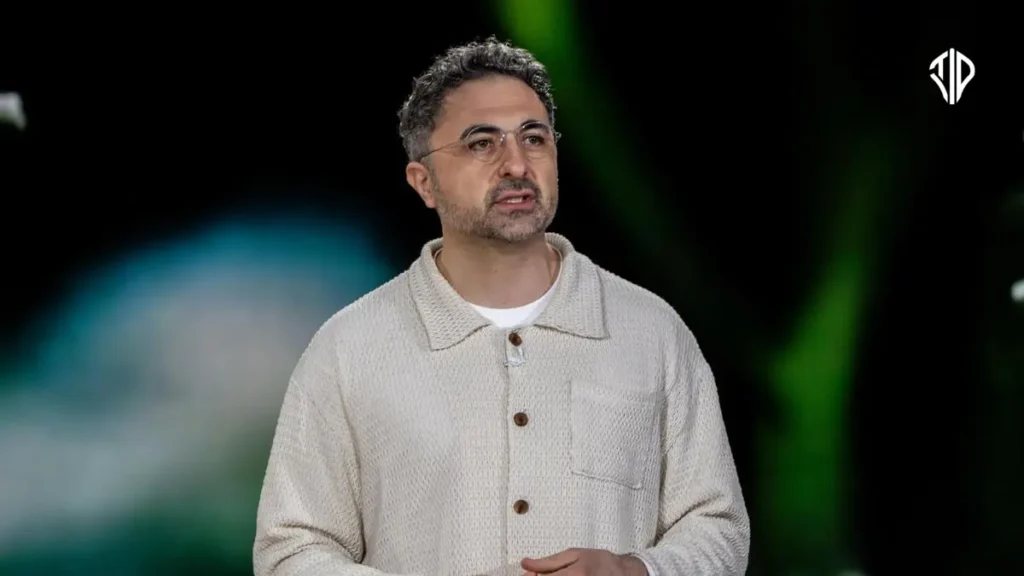
Artificial intelligence has long promised to transform the healthcare landscape, but according to recent reports, a tangible breakthrough has finally emerged in clinical diagnostics. Microsoft has introduced an advanced diagnostic tool driven by multiple cooperating artificial intelligence agents that outperformed human generalist physicians in recent comparative testing. The findings, peer-reviewed and published in the prestigious journal Science, demonstrate how sophisticated computational reasoning can analyze complex medical histories, recommend appropriate tests, and arrive at accurate diagnoses with impressive precision.
The system relies on a framework called the Diagnostic Orchestrator, which mimics the collaborative structure of a human medical panel. Rather than depending on a single language model to guess an answer, the architecture deploys specialized agent networks to cross-examine symptoms, weigh competing hypotheses, and methodically rule out alternative conditions. This collaborative digital reasoning process allows the system to approach patient cases with a structured methodology similar to experienced clinical teams working through challenging hospital admissions.
During rigorous evaluations using scenarios compiled from medical case reports and emergency department data, the results were striking. On test cases derived from hundreds of published reports in The New England Journal of Medicine, the Microsoft system achieved a diagnostic accuracy of approximately 83 percent. In comparison, generalist physicians utilizing traditional reference materials achieved roughly 36 percent accuracy, while those working without references scored around 22 percent. Furthermore, tests involving emergency department admissions data from Boston’s Beth Israel Deaconess Medical Center showed the AI system reaching 80 percent accuracy against an average of 47 percent for human physicians.
Understanding Multi-Agent AI in Medicine
Multi-agent artificial intelligence represents a significant leap forward from traditional conversational chatbots. Instead of generating a single text response, a multi-agent system breaks a complex problem down into distinct functional roles. One agent might act as a primary investigator gathering patient symptoms, another as a specialist reviewing pharmacological histories, and a third as an objective critic evaluating diagnostic probability.
This division of labor minimizes single-point failures and reduces the hallucinations common in isolated language models. By structuring the workflow to mirror clinical practice, the technology can systematically order lab work, interpret imaging notes, and calculate risk factors before presenting a final conclusion. Beyond clinical accuracy, the evaluations also indicated that the system reached its diagnoses at an estimated lower cost than human counterparts by avoiding redundant or unnecessary testing procedures.
The Path to Clinical Validation
Despite these promising benchmark results, industry experts and Microsoft researchers emphasize that real-world deployment requires caution. The current evaluations were conducted exclusively on past historical medical cases rather than active, unpredictable clinical environments. Human healthcare involves physical examinations, patient communication nuances, and emotional dynamics that cannot be fully captured by text-based electronic health records.
Microsoft plans to launch pilot testing programs in partnership with the Beth Israel Deaconess Medical Center to observe how the Diagnostic Orchestrator functions inside live hospital settings. These prospective trials will test how clinicians interact with the system in real time and evaluate whether the technology can genuinely streamline workflows without introducing new risks or administrative burdens. Regulatory compliance and patient data privacy remain paramount hurdles before any widespread commercial rollout can occur.
Balancing Automation with Human Expertise
The ultimate vision extending from this research is the pursuit of medical superintelligence, a tier of artificial intelligence capable of matching or exceeding the best human-led healthcare systems. However, leadership at Microsoft maintains that automation is intended to augment rather than replace human clinicians. The primary goal is to alleviate the administrative drudgery and burnout that plague modern medical practice, allowing doctors to dedicate more direct, empathetic time to patient care.
As healthcare institutions increasingly adopt algorithmic support tools, the medical community faces a transformative transition period. The successful integration of these systems will depend heavily on transparent validation, rigorous safety standards, and maintaining clear boundaries of accountability. Ultimately, the arrival of advanced diagnostic orchestrators signals a profound shift in how computational tools will support medical science in the coming decades.
Key Takeaways
- Microsoft introduced the Diagnostic Orchestrator, a multi-agent AI system designed for clinical diagnostics.
- In comparative testing, the system achieved 83 percent accuracy on NEJM test cases, outperforming human generalist physicians.
- Emergency department evaluations at Beth Israel Deaconess Medical Center showed the AI reaching 80 percent accuracy.
- Real-world pilot programs are planned to test live clinical workflows, data privacy, and regulatory compliance.
- The technology aims to augment clinicians, reduce burnout, and lower diagnostic costs without replacing human expertise.
Join our community by subscribing to our Weekly Newsletter to stay updated on the latest AI updates and technologies, including the tips and how-to guides.
(Also, follow us on Instagram @tid_technology for more updates in your feed and our WhatsApp Channel to get daily news straight to your Messaging App).
