The Metaverse has long been celebrated for its immersive visuals, drawing users into captivating virtual worlds. Now, this revolutionary technology is advancing further, enabling virtual sensations that bring a new level of realism to digital experiences. Imagine feeling virtual sensations in the dream-like world of the metaverse, much like a robot gaining emotions.
This innovative Metaverse technology now allows users to experience virtual sensations like kissing, mimicking the feeling of a real-world embrace. Soon, you could be consciously living and feeling within these deeply immersive virtual environments.
This development offers an exciting prospect for both virtual reality enthusiasts and those seeking unique digital interactions.
How is this Virtual Sensation Technology Possible?
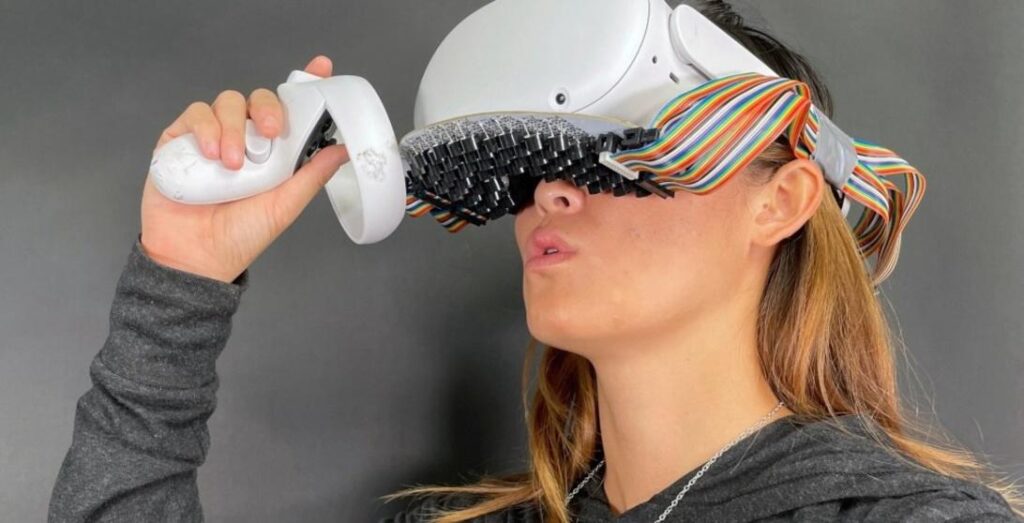
Researchers at Carnegie Mellon University in Pennsylvania have developed a groundbreaking device capable of delivering tactile sensations to the mouth, lips, and tongue. To integrate realistic virtual kissing and other oral sensations into the metaverse, these scientists successfully adapted specialized ultrasonic transducers to an existing VR headset.
These ultrasonic transducers, strategically attached to the lower part of VR headsets, emit focused sound waves around the mouth. This technology can simulate various tactile sensations, including swipes and vibrations, providing a realistic feel for any activity involving the mouth in the virtual world.
Essentially, these electronic transducers generate or sense ultrasound energy. This energy, when directed, creates air pressure waves that interact with the skin, thereby producing distinct haptic sensations.
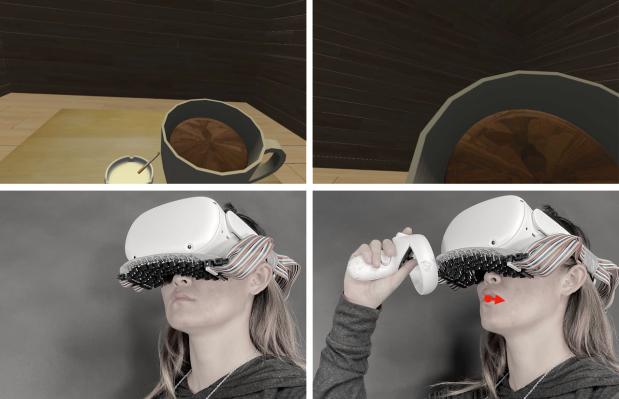
This innovative technology allows users within the metaverse to engage in activities like drinking from a virtual water fountain, sipping tea or coffee, and even experiencing the sensation of smoking a cigarette, all without actual physical interaction.
Researchers on Haptic Feedback in VR and Immersion
Carnegie Mellon University researchers emphasized, “Haptics boosts realism and immersion, and heightens user reactions.”
They also noted, “Although we demonstrated a range of haptic effects, the vocabulary of sensations is still limited compared to that of the real world (a high bar).”
Exploring the Nuances of Virtual Sensations
While the metaverse doesn’t currently offer taste sensations (though a virtual-tasting device exists independently), it’s challenging to fully grasp the impact of these haptic vibrations without experiencing them firsthand.
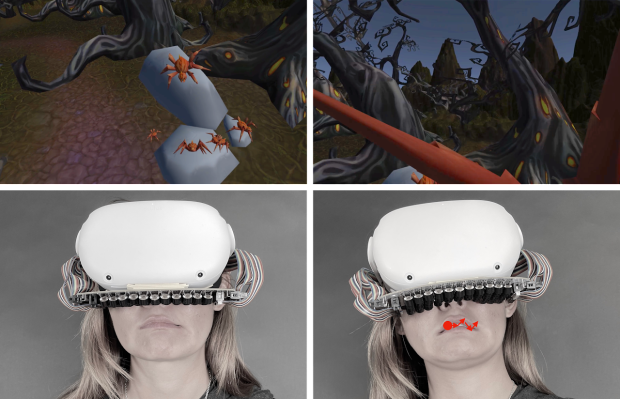
While virtual kissing was not the primary focus of their immediate discussions, the researchers extensively covered other compelling scenarios. For instance, in a haunted adventure game featuring spiders, testers experienced distinct sensations on their lips as they moved through virtual webs. They also reported feeling creepy crawlers seemingly jumping at their faces and even a sensory effect from exploding spiders when shot.
Discover More Related Content
The haptic technology demonstrated in this VR application suggests its significant potential to deliver a wide range of sensations when directed across the body. Therefore, in the near future, virtual reality could genuinely provide immersive feelings of hugs, cuddles, and even more profound physical interactions.
Pioneering Haptic Innovations: A Historical Look
This exploration of advanced haptic technology is not a new endeavor. Previously, a startup named ‘Ultrahaptics‘ aimed to enhance VR immersion by employing ultrasound waves to allow users to feel virtual objects.
Tom Carter, co-founder of Ultrahaptics and a computer science graduate student at the University of Bristol, suggested that their startup’s technology could significantly improve existing touch-free interfaces, such as those used by Microsoft’s Kinect or Leap Motion devices. This improvement would be achieved by reflecting air pressure waves off the hand, enabling distinct sensations for individual fingertips. Carter stated, “You actually feel like you’re interacting with a thing and getting immediate tactile feedback.”
Such advancements continue to push the boundaries of haptic technology, making highly realistic virtual interactions accessible to a broader audience in the near future.
Join our community by subscribing to our Weekly Newsletter to stay updated on the latest AI updates and technologies, including the tips and how-to guides. (Also, follow us on Instagram (@inner_detail) for more updates in your feed). (For more such interesting informational, technology and innovation stuffs, keep reading The Inner Detail).