Understanding Smart Speakers: What Are They?
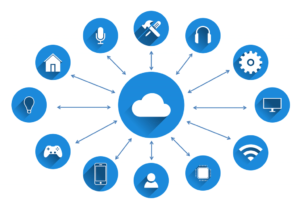
A smart speaker combines audio playback with voice command capabilities, allowing users to interact and control it using an integrated virtual assistant. These intelligent devices activate upon hearing specific ‘wake words’ or ‘hot words,’ which vary by brand. Functioning as a central smart hub, they leverage Wi-Fi and Bluetooth to offer more than just music; they provide access to advanced home automation features. Modern smart speakers often include a smart display screen, offering visual feedback for commands, media playback, and notifications.
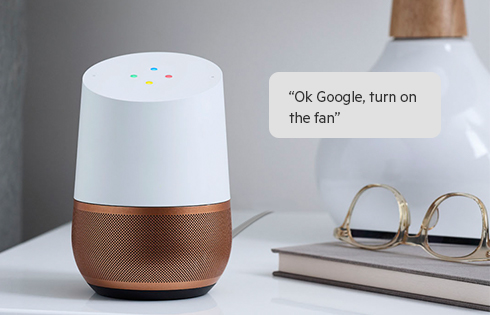
Smart speakers represent a significant 21st-century technological advancement, designed to simplify daily life. Their sophisticated voice recognition technology enables hands-free activation and control over other internet-enabled smart home devices. For instance, a simple voice command like “turn off the fans” can instantly power down your smart fan, demonstrating their intuitive ease of use.
The global adoption of smart speakers has grown rapidly in just four to five years since their introduction. Notably, 16% of Americans, totaling approximately 39 million individuals, now own a smart speaker. Key market leaders in this booming industry include Amazon Echo, Google Home, and Apple Siri-enabled devices.
Key Features and Capabilities of Smart Speakers
Smart speakers often serve as the central control hub for modern homes due to their seamless integration and management of Internet of Things (IoT) devices, making smart home technology more accessible and user-friendly. These devices are designed to constantly listen for their specific wake word, remaining in a low-power listening mode until activated, unless their microphone is manually disabled.
These intelligent sound devices also offer extensive compatibility across various services and platforms, facilitate peer-to-peer connections via mesh networking, and incorporate advanced virtual assistants. The two-way interactive nature of smart speakers, combined with constant internet connectivity, significantly streamlines daily tasks. For example, asking an Amazon Echo “Who is Warren Buffett?” will instantly provide relevant information from a Wikipedia page.
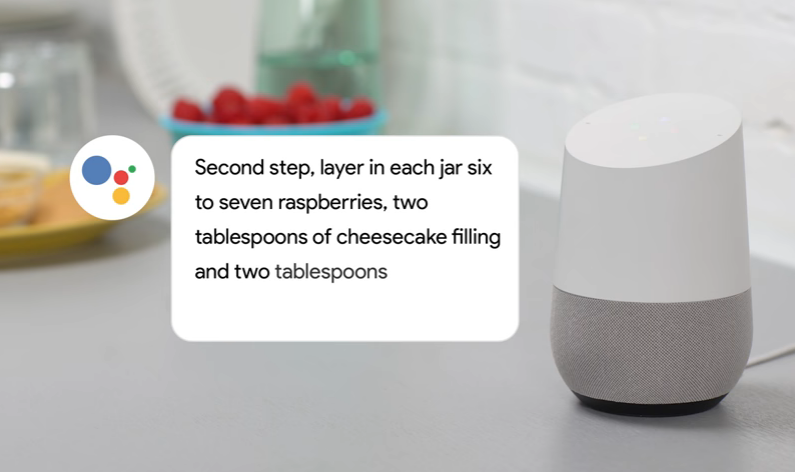
Modern smart speakers now include advanced functionalities like hands-free calling via cellular networks. A Stanford University study on conversational accuracy across various smart speakers indicated an impressive 80% response accuracy. However, this accuracy showed a notable decline to 65-70% when interacting with Black individuals’ accents. It’s important to note that the overall usability of these speakers and their compatibility with other services are largely determined by the specific manufacturer.
Top Smart Speaker Brands and Models
Google Home and Nest Devices
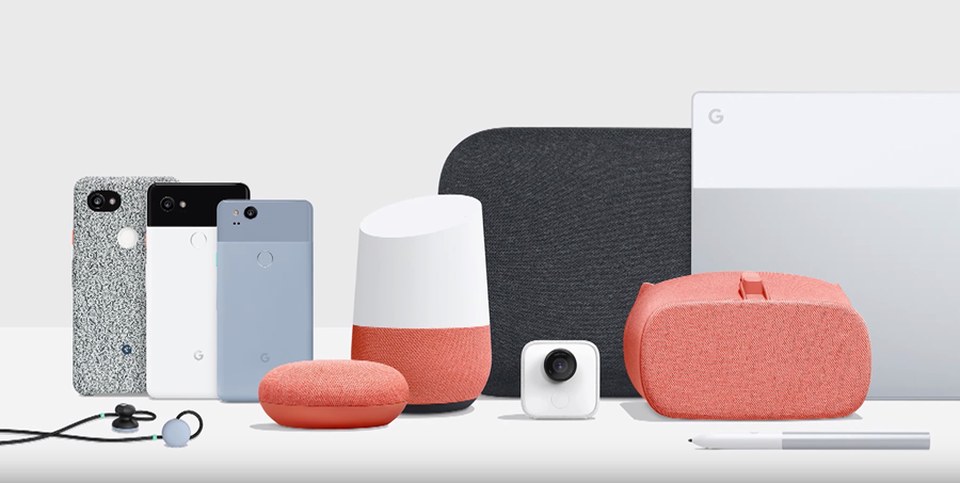
Google introduced its initial smart speaker, ‘Google Home’ (now rebranded as Google Nest), in the U.S. in November 2016. The Google Home smart speaker features an attractive cylindrical design, complete with colored status LEDs and intuitive touch controls for music and volume on its top surface. A discreet button on the back allows users to easily disable the microphone for privacy. As of August 6, 2020, Google had reported impressive sales of 52 million Nest units.
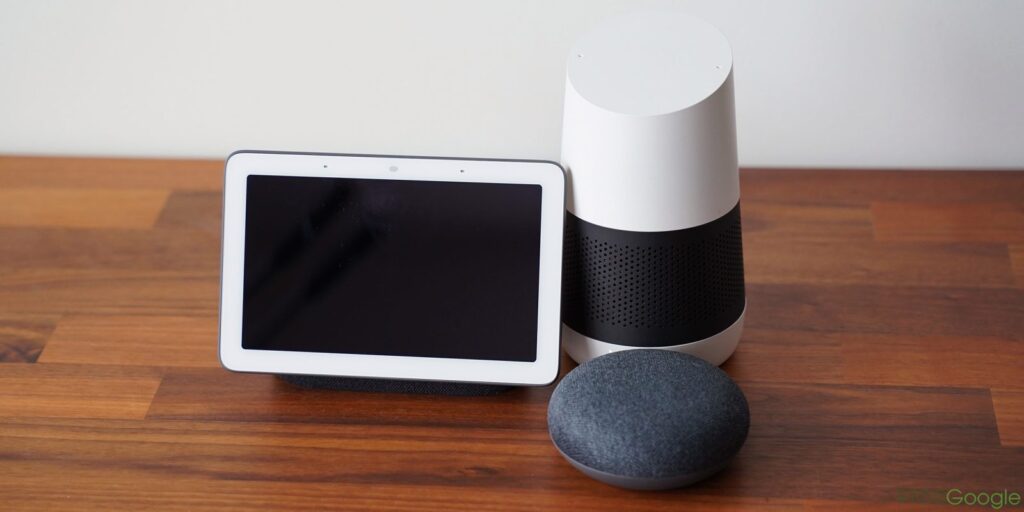
Google Nest devices are powered by Google Assistant, facilitating seamless voice controls and interactions. Beyond standard smart speaker features, Google Home expands its services and platforms to include audio playback from Google Play Music, Spotify, and iHeartRadio. It also integrates with Netflix, YouTube, and Google Photos for media, along with Google Calendar and Google Keep for task management. Users can also access live news updates from sources like CNN, BBC, CNBC, and The Wall Street Journal, all supported by robust Bluetooth and Wi-Fi connectivity. As of August 6, 2020, Google had released six distinct Google Home speaker models.
Google Home’s smart home capabilities allow for effortless control of various connected devices, effectively positioning it as a central command hub. Supported devices and home automation services include Chromecast, Nest, SmartThings, Philips Hue, LIFX, Lightwave RF, and Logitech Harmony.
Although reports suggested ‘Prince’ might become a future wake word, Google Nest currently responds to ‘Hey Google’ and ‘OK Google’. Recent updates to Nest devices have introduced innovative features like ‘Family Bell’ alarms, enabling one speaker to call another by name in a different room and deliver a message, truly simplifying household communication.
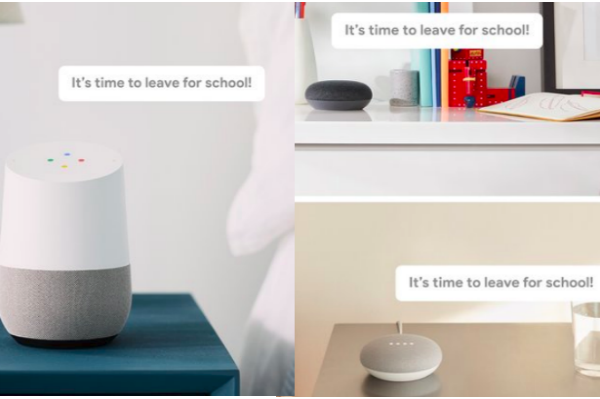
To fully utilize the voice control features of Google smart speakers, users typically need to install the Google Home app on their smartphone and complete a voice training setup with Google Assistant prior to connecting to the device.
Amazon Echo Smart Speakers
The Amazon Echo, first introduced in November 2014, initially functioned primarily as a speaker with the added capability of reading Amazon Kindle e-books aloud.
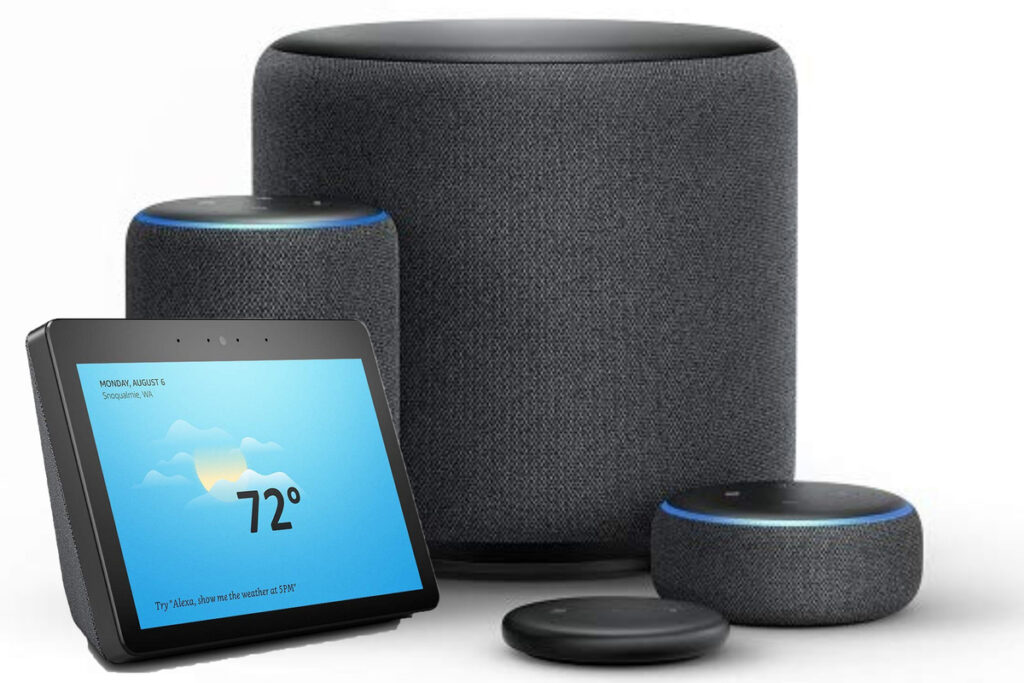
The Amazon Echo utilizes ‘Alexa’ as its primary virtual assistant, with voice commands and interactions powered by Amazon Web Services and Alexa Voice Services. Echo devices seamlessly play music from a user’s Amazon Music account and offer built-in support for popular streaming services including Apple Music, iHeartRadio, Pandora, Sirius XM, and Spotify. Additionally, the Echo supports integrations with IFTTT and Nest thermostats. As of August 6, 2020, Amazon had released eight distinct designs of Alexa-enabled devices. The Echo can also stream music from non-natively supported services like Google Play Music directly from a phone or tablet via Bluetooth. Users can manage voice-controlled alarms, timers, shopping lists, and to-do lists, and instantly access Wikipedia articles. The Echo can also answer questions regarding entries in a user’s Google Calendar. Furthermore, it integrates with various smart home platforms, including Yonomi, Philips Hue, Belkin Wemo, SmartThings, Insteon, and Wink.
Alexa further expands its utility and comprehension capabilities through the Alexa Skills Kit, which empowers third-party developers to create and integrate new functionalities. Moreover, smart display-equipped Echo speakers now support not only cellular calls but also Skype calls.
Smart Speaker Security and Privacy Concerns
Despite their conveniences, smart speakers present significant drawbacks, primarily concerning user privacy and security vulnerabilities. These devices continuously record snippets of user speech data, which can understandably raise serious privacy concerns.
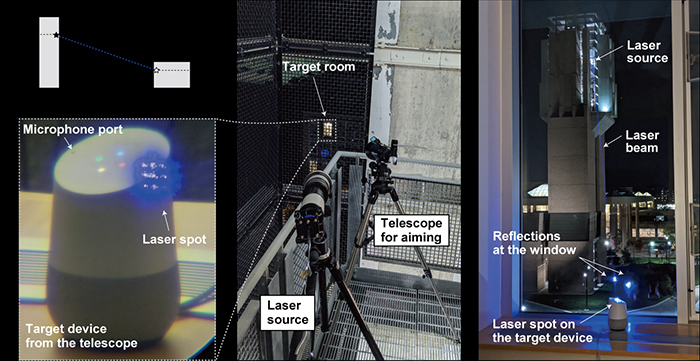
Similar to many advanced technologies, smart speakers are not immune to hacking and exploitation. Research has demonstrated that laser pointers can be used to trick smart speakers into executing voice commands, such as opening doors or making purchases, even from considerable distances. Researchers successfully hijacked smart speakers from 230 to 350 feet away by precisely focusing lasers through a telephoto lens. In one striking instance, a Google Home device located inside a room in a separate building was manipulated into opening a garage door. The laser modulation directed at its microphone port through a window mimicked the exact voice command: “OK Google, open the garage door.”
Conclusion: The Future of Smart Speakers
Despite potential privacy and security vulnerabilities, smart speakers continue to be rapidly adopted globally, largely due to their impressive usability and enhanced functionalities. When comparing leading products mentioned in this article, David Pierce of Wired suggests that Google Nest often performs optimally compared to Amazon Echo. Pierce notes that while Echo may be less visually impressive, it offers superior reliability, whereas Nest delivers a richer, brighter, and more dynamic audio experience than Echo. Ron Amadeo of Ars Technica has even described Google Nest as “absolutely incredible.”
While Amazon Echo and Google Home share similar core functionalities, evidence suggests Google Home boasts higher accuracy in voice commands and controls compared to its rivals. Conversely, Alexa offers a distinct advantage with its vast array of features. This ongoing competition defines the smart speaker market.
References:
- https://www.engadget.com/2019-11-05-lasers-voice-commands-smart-speaker.html
- https://en.wikipedia.org
- https://gadgets.ndtv.com/tags/google-home
Join our community by subscribing to our Weekly Newsletter to stay updated on the latest AI updates and technologies, including the tips and how-to guides. (Also, follow us on Instagram (@inner_detail) for more updates in your feed).
(For more such interesting informational, technology and innovation stuffs, keep reading The Inner Detail).