

In an era defined by rapid technological evolution, scientific breakthroughs are not just incremental improvements; they are seismic shifts that redefine our capabilities and shape our future.
Microsoft, a titan in the tech world, is not merely building software but is actively pushing the boundaries of scientific understanding, particularly at the intersection of artificial intelligence and fundamental physics.
Their researchers are tackling some of humanity’s most pressing challenges, from designing new materials and forecasting global weather to revolutionizing healthcare diagnostics and pioneering quantum computing.
These advancements are not isolated; they often build upon years of fundamental research and contribute to a global tapestry of innovation. With a focus on sustainability and accessibility, Microsoft’s 2025 research output, published in numerous peer-reviewed journals, showcases how AI and other cutting-edge technologies are accelerating progress across banking, healthcare, life sciences, and energy.
Here are 10 remarkable scientific breakthroughs from Microsoft researchers that are charting a path for much-needed innovation.
#1 Majorana 1: The Dawn of Topological Quantum Computing
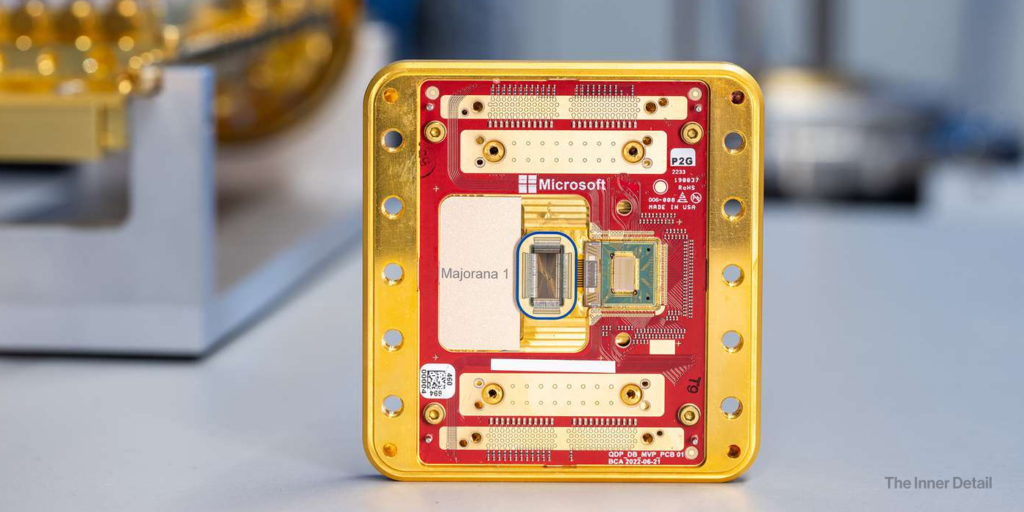
Imagine self-healing materials, catalysts that transform pollutants, or agricultural breakthroughs that boost food security in harsh climates. Such visions could be realized by powerful quantum computers. Microsoft researchers made a significant stride this year with the publication in Nature detailing the creation of Majorana 1, the world’s first quantum processor powered by topological qubits.
This chip leverages a novel quantum architecture, built upon a breakthrough material called a topoconductor, which allows for the observation and control of Majorana particles. These unique particles are expected to form more reliable and scalable qubits, paving the way for quantum computers capable of solving industrial-scale problems that are currently intractable.
While many companies and research institutions, such as IBM with its superconducting qubits and IonQ with trapped-ion qubits, are advancing quantum computing, Microsoft’s focus on topological qubits offers a distinct advantage.
Topological qubits are theoretically more stable and resistant to environmental noise, promising longer coherence times and fewer errors—critical factors for building truly scalable quantum computers. This approach, though highly complex, represents a significant scientific hurdle overcome in the global race for quantum supremacy.
#2 BioEmu-1: Unlocking Protein Dynamics for Better Medicines
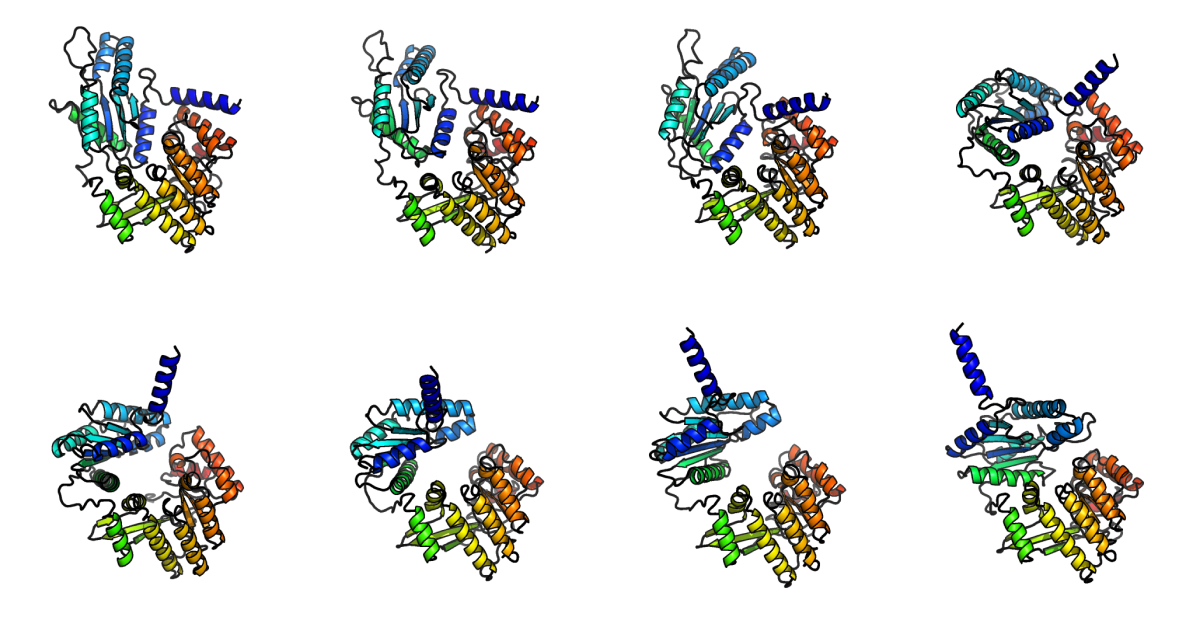
Proteins are the fundamental workhorses of life, central to virtually all biological processes and paramount in drug discovery. While AI has drastically improved our ability to predict static protein structures (famously demonstrated by DeepMind’s AlphaFold), understanding their dynamic behavior and stability remains a critical challenge, often requiring years of simulation.
Microsoft’s Biomolecular Emulator-1 (BioEmu-1), a generative deep-learning model, offers a revolutionary solution. Published in Science, BioEmu-1 can generate thousands of diverse protein structures per hour on a single GPU, providing insights into protein flexibility and stability at unprecedented speed and a fraction of the computational cost of traditional methods.
This breakthrough is crucial because many medications work by interacting with proteins, influencing their function or preventing harm. A deeper understanding of protein dynamics could accelerate the design of more effective and targeted drugs.
Companies like Google’s DeepMind have made incredible strides in predicting protein structures, but BioEmu-1 specifically tackles the dynamic aspect and stability, offering a complementary and highly valuable tool for pharmaceutical and biotechnology research, where understanding how proteins move and change is vital for therapeutic design.
#3 MatterGen and MatterSim: AI-Driven Materials Discovery

Materials innovation underpins nearly every technological advance, from robust batteries and efficient fuel cells to powerful magnets. Historically, discovering new materials has been a laborious and expensive process, relying on extensive experimentation or computationally intensive screening of millions of possibilities.
Microsoft’s MatterGen is a generative AI tool that bypasses traditional screening. As detailed in Nature, MatterGen creates novel inorganic materials based on specified design requirements, akin to how an AI image generator creates images from a text prompt. Trained on over 600,000 examples, MatterGen can synthesize realistic 3D material structures with defined chemical, mechanical, electronic, or magnetic properties.
Paired with MatterSim, an AI-powered tool for rapidly simulating material properties, MatterGen establishes a feedback loop that dramatically accelerates both material exploration and simulation. Other organizations, such as the Materials Project at Lawrence Berkeley National Lab, also leverage computational approaches for materials discovery, and companies like Citrine Informatics offer AI platforms for R&D.
However, MatterGen’s generative design capability, which can directly propose new materials with desired properties, represents a significant leap forward in reducing the time and cost associated with developing the next generation of materials for energy, electronics, and beyond.
#4 RAD-DINO: Enhancing Healthcare with Multimodal AI Radiology

In healthcare, timely and accurate information can be lifesaving. A collaboration between Microsoft Research and Mayo Clinic, published in Nature Machine Intelligence, explores how generative AI foundation models can significantly improve patient care by providing clinicians with more precise information.
The project, named RAD-DINO, integrates text and X-ray images into multimodal foundation models. This technology uses AI to identify anatomical matches between chest X-rays of different subjects, highlighting similarities with proportional brightness on heatmaps. This allows doctors to analyze radiology results more quickly and comprehensively.
Many AI companies, including those like Zebra Medical Vision (now part of Nanox) and Qure.ai, are developing AI tools to assist radiologists in detecting anomalies in medical images.
However, RAD-DINO’s focus on multimodal integration—combining visual data with textual information—and its specific method for identifying subtle anatomical correspondences across diverse patient X-rays offers a sophisticated approach to improving diagnostic accuracy and reducing clinician workload, especially in complex cases.
#5 Aurora: The Future of Atmospheric and Weather Forecasting
Accurate prediction of atmospheric events is crucial for everything from agriculture and disaster preparedness to energy grid management. Microsoft’s Aurora AI foundation model, developed by Microsoft Research and published in Nature, leverages the latest advancements in AI to predict a wide range of environmental events with unprecedented precision and speed, at a much lower computational cost than traditional numerical forecasting and previous AI models.
Aurora is incredibly versatile; trained on over a million hours of general weather patterns, it can be fine-tuned to forecast air pollution, ocean waves, and tropical cyclones in seconds, a process that traditionally takes hours on supercomputers.
Aurora’s early results have spurred interest in its potential for improving rain predictions, optimizing crop logistics, and protecting energy grids. While other AI models like Google DeepMind’s GraphCast and Huawei’s Pangu-Weather have also demonstrated remarkable capabilities in weather forecasting, Aurora distinguishes itself with its broad atmospheric scope and its commitment as an open-source platform.
It deepens research partnerships through the Microsoft AI for Good grant and investing in community weather stations, fostering a collaborative approach to global environmental challenges.
#6 FCDD: AI for Earlier and More Accurate Breast Cancer Screening
Breast cancer remains the most common cancer among women globally, and while early screening is vital, traditional methods often lead to high rates of false positives, causing immense patient anxiety and unnecessary biopsies. This issue is particularly acute for women with dense breast tissue, which increases cancer risk and obscures abnormalities in mammograms.
A new AI model called FCDD (Fully Convolutional Data Description), developed through a collaboration between Microsoft’s AI for Good Lab, the University of Washington, and Fred Hutchinson Cancer Center, aims to improve early detection. Published in Radiology, FCDD generates MRI heatmaps that locate suspected tumors with a very high degree of accuracy, outperforming other AI models, and has since been made open source.
Numerous medical device companies and AI startups, such as Hologic and Siemens Healthineers, are investing in AI for breast imaging to aid radiologists. However, FCDD’s specialized approach to handling dense breast tissue, a known challenge in traditional screening, represents a focused advancement.
While AI won’t replace radiologists, FCDD can provide them with a more powerful tool for evaluating difficult cases and potentially reducing their workload, leading to earlier and more precise diagnoses.
#7 Seaweed-Infused Cement: A Green Revolution for Concrete
Concrete is the backbone of modern infrastructure, and cement, its primary component, is the second most-used material on Earth after water. However, cement production is a major contributor to global greenhouse gas emissions. In a groundbreaking move, researchers at the University of Washington and Microsoft developed a new type of low-carbon concrete made from seaweed.
Their findings, published in Matter, revealed that dried, powdered seaweed mixed with cement exhibited a 21% lower global warming potential (GWP), a metric comparing heat trapped by gases to carbon dioxide. Seaweed acts as a carbon sink, absorbing CO2 as it grows.
This innovation was achieved rapidly in just 28 days, thanks to custom machine learning models, a stark contrast to the typical five years of trial-and-error. Companies like CarbonCure Technologies are developing technologies to inject captured CO2 into concrete, and Heidelberg Materials is exploring alternative binders and CO2 capture.
Microsoft’s seaweed-infused cement offers a unique bio-based approach to decarbonizing one of the world’s most ubiquitous and carbon-intensive materials, demonstrating nature-inspired solutions to industrial-scale environmental problems.
#8 Mapping Floods from Space: Unveiling Hidden Dangers
Floods inflict extensive global damage annually, yet comprehensive, long-term global flood datasets remain scarce, hindering disaster preparedness. Addressing this, a deep learning flood detection model from the Microsoft AI for Good Lab leverages the cloud-penetrating capabilities of powerful Earth observation satellites using radar imagery.
As explained in Nature Communications, this model enables researchers to map flood-impacted areas even through dense cloud cover and at night, providing a reliable, 10-year global picture of flood-prone regions.
This long-term analysis offers policymakers critical insights into flood trends, enhancing community preparedness. While institutions like NASA (with its Earthdata program) and the European Space Agency (with Copernicus Sentinel missions) provide satellite data for flood monitoring, and companies like Planet Labs offer extensive Earth observation, Microsoft’s model specifically excels at processing radar imagery to pierce through cloud cover, a significant barrier for optical satellites.
Its public availability also empowers researchers and responders worldwide to improve flood monitoring and disaster response, especially in regions frequently obscured by clouds.
#9 Analog Optical Computer: Light-Speed AI and Optimization
Artificial intelligence and complex optimization problems often demand immense computational power, primarily delivered by energy-hungry GPUs. Microsoft has developed an Analog Optical Computer (AOC) that uses light instead of conventional digital electronics to efficiently tackle these challenges.
Published in Nature, the AOC demonstrates the potential of harnessing light for key calculations, potentially offering significantly higher speed and a fraction of the energy consumption compared to current GPU-based systems. Built with existing, scalable technologies like micro-LED lights, it’s designed for affordability and easier manufacturing.
The prototype successfully solved two critical optimization problems: finding the most efficient way to settle complex banking transactions and drastically reducing the time required for MRI scans.
Other companies like Lightmatter and Lightelligence are also exploring optical computing for AI acceleration, focusing on various architectures. Microsoft’s AOC, with its emphasis on analog optical processing for specific optimization and AI inference tasks using readily available components, presents a practical and scalable pathway to unlocking new efficiencies in demanding computational fields.
#10 Managing the Risk Behind the Promise of AI in Biology
The extraordinary advancements in AI are opening unprecedented frontiers in biology, offering solutions to medical and environmental challenges. Yet, this “dual-use” potential also introduces biosecurity risks, potentially lowering barriers to designing harmful toxins or pathogens. A Microsoft-led paper published in Science describes a two-year confidential project that began in late 2023.
Recognizing that openly publishing methods and failure modes could be exploited by malicious actors, Microsoft researchers held a multi-stakeholder deliberation involving government agencies, international biosecurity organizations, and policy experts.
This led to the development of a tiered-access system for data and methods, implemented in partnership with the International Biosecurity and Biosafety Initiative for Science (IBBIS). To their knowledge, this marks the first time a leading scientific journal has formally endorsed such a tiered-access approach to manage an information hazard. Major AI labs like OpenAI, Anthropic, and Google DeepMind are also actively engaging in responsible AI development and exploring the societal and biosecurity implications of advanced AI.
Microsoft’s proactive and collaborative approach, culminating in a novel publication framework, sets a crucial precedent for responsibly navigating the ethical complexities and dual-use risks inherent in cutting-edge scientific research.
These 10 breakthroughs highlight Microsoft’s profound commitment to pushing the boundaries of scientific discovery, not just for commercial gain, but to address global challenges. By blending foundational research with applied AI, they are shaping a future where technology serves as a powerful catalyst for a healthier, more sustainable, and more informed world.
Key Takeaways
- Microsoft is leveraging AI and cutting-edge technologies across diverse fields, from quantum computing and materials science to healthcare and environmental forecasting.
- Significant breakthroughs include the development of a topological quantum processor (Majorana 1), an AI model for protein dynamics (BioEmu-1), and generative AI for materials discovery (MatterGen).
- Their research addresses critical global challenges, offering solutions for sustainable infrastructure (seaweed-infused cement), improved disaster preparedness (flood mapping), and responsible AI development in biology.
- Microsoft prioritizes ethical considerations, evident in their tiered-access system for biosecurity risks in AI, and fosters collaboration through open-source initiatives like Aurora.
Join our community by subscribing to our Weekly Newsletter to stay updated on the latest AI updates and technologies, including the tips and how-to guides. (Also, follow us on Instagram (@inner_detail) for more updates in your feed).
(For more such interesting informational, technology and innovation stuffs, keep reading The Inner Detail).
