
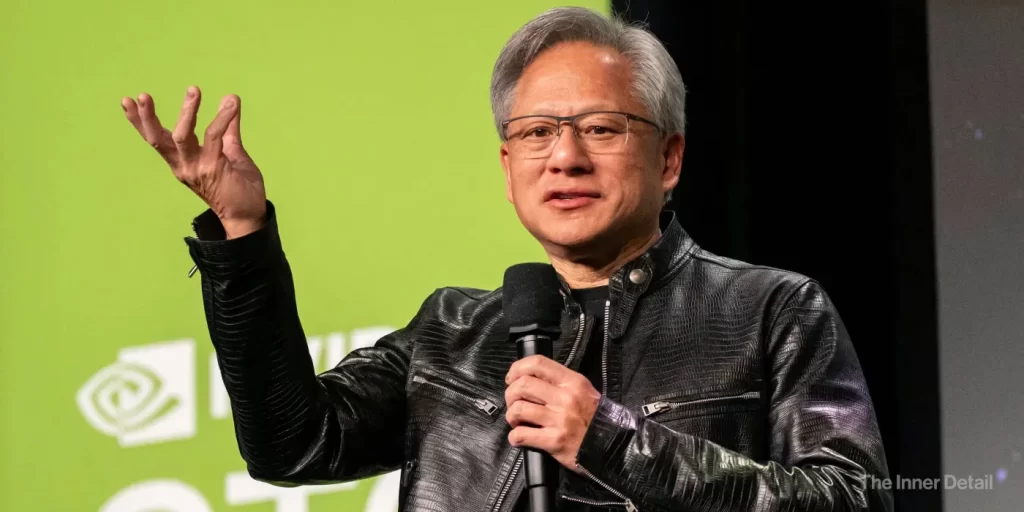
In an era where artificial intelligence is reshaping industries and daily life, the academic world is no exception. Students today stand at a unique crossroads, with powerful AI tools readily available. But how does one navigate this new frontier effectively? Jensen Huang, the visionary CEO of Nvidia, recently shared his insights on precisely this — how he would leverage AI if he were a student today. His perspective offers a refreshing and practical guide, emphasizing AI not as a shortcut, but as a profound accelerator for learning and innovation.
AI as Your Personalized Study Partner
Huang’s vision starts with AI as an unparalleled personal tutor. Imagine having an expert available 24/7, ready to explain complex concepts, clarify doubts, and even challenge your understanding. Instead of just asking for answers, students should engage AI as a dialogue partner.
- Deepen Understanding: Ask AI to explain intricate topics like quantum physics or advanced calculus in various ways — “Explain it to me like I’m five,” or “Explain it using an analogy to a football game.” This iterative questioning helps solidify comprehension.
- Generate Practice Problems: Request AI to create tailored practice questions, quizzes, or even mock exam scenarios based on your curriculum. This allows for endless, customized practice sessions until mastery is achieved.
- Simulate Debates: For subjects requiring critical thinking and argumentation, AI can act as an opposing viewpoint, helping you refine your arguments and anticipate counter-arguments.
Leveraging AI for Research and Synthesis
The sheer volume of information available today can be overwhelming. Huang suggests that AI can become an indispensable tool for sifting through this data, extracting key insights, and synthesizing information efficiently.
- Summarize Complex Readings: Provide AI with long research papers, articles, or textbooks, and ask it to summarize the core arguments, identify key findings, or list the main takeaways. This helps you grasp the essence quickly.
- Structure Your Ideas: When starting an essay, a project report, or a presentation, use AI to brainstorm outlines. Feed it your topic and main points, and let it suggest logical structures, ensuring coherence and flow.
- Identify Connections: AI can help you connect disparate pieces of information across different disciplines, revealing patterns or relationships you might not have noticed manually. This fosters interdisciplinary thinking.
AI for Ideation and Creative Problem-Solving
Beyond academic tasks, Huang encourages students to see AI as a catalyst for creativity and a powerful partner in problem-solving. This goes beyond simple content generation to using AI as a sounding board for novel ideas.
- Brainstorming Sessions: If you’re stuck on a project idea or need a creative spark for a presentation, prompt AI with your constraints and goals. It can generate a multitude of diverse ideas, expanding your mental landscape.
- Exploring Scenarios: For scientific or engineering challenges, AI can help simulate different scenarios or explore various design possibilities, providing insights that might lead to innovative solutions.
- Refining Arguments: When preparing for a debate or crafting a persuasive essay, use AI to challenge your own assumptions, find weaknesses in your arguments, or suggest stronger supporting evidence.
The Human Element: Critical Thinking Remains Key
While AI offers immense capabilities, Huang’s underlying message is clear: these tools augment, rather than replace, human intellect. The most successful students will be those who master the art of asking the right questions, critically evaluating AI’s output, and ultimately, exercising their own judgment.
- Verify and Validate: Always cross-reference information provided by AI with reliable sources. AI can sometimes “hallucinate” or provide inaccurate data, making critical verification essential.
- Understand, Don’t Just Output: The goal isn’t to have AI do your work for you, but to use it to understand concepts more deeply. If you don’t grasp the underlying principles, simply generating an answer will yield little long-term benefit.
- Develop Your Own Voice: While AI can help structure arguments or phrase sentences, ensure your unique perspective, creativity, and critical thinking shine through in your original work.
Conclusion
Jensen Huang’s advice provides a powerful roadmap for students navigating the AI era. By embracing AI as a personal tutor, a research assistant, and a creative partner, students can unlock unprecedented learning potential. The key is to approach AI with curiosity, a discerning mind, and a commitment to genuine understanding, ensuring that these remarkable tools truly empower the next generation of innovators and thinkers.
Indeed, if you are looking for courses to do related to AI, my article on “10 Best Free AI Courses for Beginners to Advanced” will help you in upgrading your AI-knowledge. Or if you’re exploring AI but stuck on ‘where to start’, spend few minutes reading “How to become AI-Ready? – A Guide to Employees & Students”. I hope the article suffices you with the required information. If you have any query regarding anything, feel free to comment down. I am there to help you out.
Key Takeaways
- AI serves as a 24/7 personalized tutor, enhancing understanding through dialogue and customized practice.
- Leverage AI for efficient research, summarizing complex readings, structuring ideas, and identifying interdisciplinary connections.
- Utilize AI as a creative partner for brainstorming, exploring scenarios, and refining arguments.
- Critical thinking, verification, and developing a unique voice remain paramount, ensuring AI augments rather than replaces human intellect.
Join our community by subscribing to our Weekly Newsletter to stay updated on the latest AI updates and technologies, including the tips and how-to guides. (Also, follow us on Instagram (@inner_detail) for more updates in your feed).
(For more such interesting informational, technology and innovation stuffs, keep reading The Inner Detail).
