
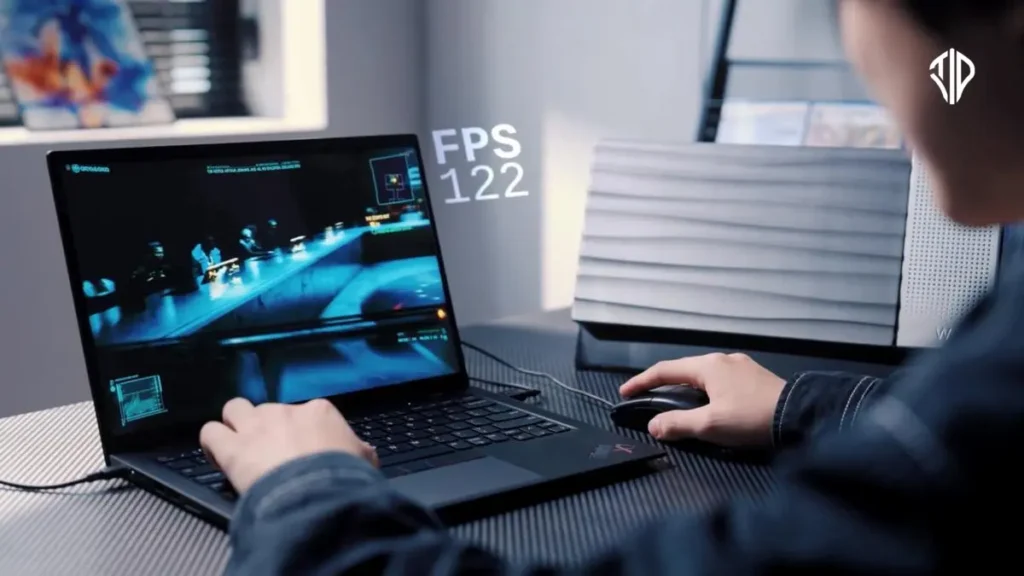
External graphics cards have long promised to bridge the gap between thin, portable laptops and high-performance desktop rigs. Yet, hardware limitations have persistently kept them bound to physical cables, requiring high-bandwidth connections like Thunderbolt 5, USB4, or OCuLink. A hardware startup is attempting to change this paradigm by shifting data transmission entirely to the airwaves. According to recent reports, a company called WiCi has introduced the concept of the WiCi One, pitching it as the world’s first successful wireless external graphics card.
The promise of a wireless GPU capable of delivering high-end gaming and local artificial intelligence performance sounds like science fiction. Traditional graphics pipelines require massive amounts of data to travel back and forth between the system processor and the graphics memory at blazing speeds. By utilizing the capabilities of modern wireless standards, this new development attempts to bypass physical tethering. Understanding how this technology works, what it claims to achieve, and the hurdles it faces helps clarify whether wireless eGPUs are a genuine paradigm shift or an overly ambitious networking experiment.
The Engineering Challenge of Wireless Graphics
For decades, external graphics enclosures have struggled with latency and throughput bottlenecks. A desktop GPU communicates directly with the motherboard through a PCIe slot, moving gigabytes of data every single second. When externalized, that connection must pass through a cable. Thunderbolt and OCuLink were designed specifically to handle this heavy data load with minimal delay.
Wi-Fi technology, even in its latest iterations, introduces packet loss, jitter, and latency that typically make real-time graphics rendering difficult over a network connection. However, the emergence of Wi-Fi 7 brings significantly higher throughput, multi-link operation, and reduced latency channels. The developers behind the WiCi One claim that these network advancements are sufficient to stream GPU instructions and computational workloads to multiple client devices simultaneously across a local network.
During early demonstrations, the wireless eGPU effectively appears as an available Wi-Fi network connection. A user logs into the device from a modest, low-powered laptop, routing heavy graphics and processing tasks away from the local machine and onto the remote hardware box.
Performance Claims and Hardware Configurations
The WiCi One is currently slated for a late 2026 commercial release and plans to launch with two distinct performance tiers. The entry-level model houses an Nvidia RTX 5060 Ti, while the flagship variant packs a powerful Nvidia RTX 5090. Pricing for the more accessible model is expected to carry a hefty price tag, starting around two thousand dollars for early buyers and scaling up to twenty-six hundred dollars at standard retail.
According to internal benchmarks released by the company, the performance targets are remarkably high for a wireless architecture. The RTX 5060 Ti configuration reportedly handles demanding video games like Cyberpunk 2077 at roughly eighty frames per second in 4K resolution using Nvidia DLSS scaling. Meanwhile, the flagship RTX 5090 variant pushes past the one-hundred-frame mark in similar high-resolution testing environments.
Beyond gaming, the device targets artificial intelligence workloads, local large language models, and creative applications. The company states that the hardware can execute local LLM inferences, video editing exports in software like Adobe Premiere Pro, and 3D rendering tasks in Blender without requiring modifications to the host software.
Potential Implications for Portable Computing
If a wireless eGPU can successfully deliver low-latency performance without a physical cable, the implications for consumer hardware are vast. Users would no longer need to purchase specialized laptops with dedicated graphics cards, expensive docking stations, or specific port layouts. A lightweight tablet or ultrabook could theoretically transform into a heavy-duty gaming rig or a local AI workstation simply by connecting to a local wireless node in the room.
However, skepticism remains warranted until independent reviewers can test the hardware outside controlled corporate demonstrations. Network congestion, interference from neighboring routers, and inherent wireless latency remain formidable adversaries for real-time video output. Whether the industry embraces wireless graphics or continues to rely on copper and fiber cables will depend entirely on how well these units perform under real-world home and office conditions.
Key Takeaways
- The WiCi One is introduced as the world’s first successful wireless external graphics card utilizing Wi-Fi 7 technology.
- It launches in late 2026 with an entry-level RTX 5060 Ti model and a flagship RTX 5090 variant.
- The system aims to stream high-end gaming and AI workloads wirelessly to low-powered laptops and tablets.
- Skepticism remains regarding real-world latency, network congestion, and interference outside of controlled testing environments.
Join our community by subscribing to our Weekly Newsletter to stay updated on the latest AI updates and technologies, including the tips and how-to guides.
(Also, follow us on Instagram @tid_technology for more updates in your feed and our WhatsApp Channel to get daily news straight to your Messaging App).
