
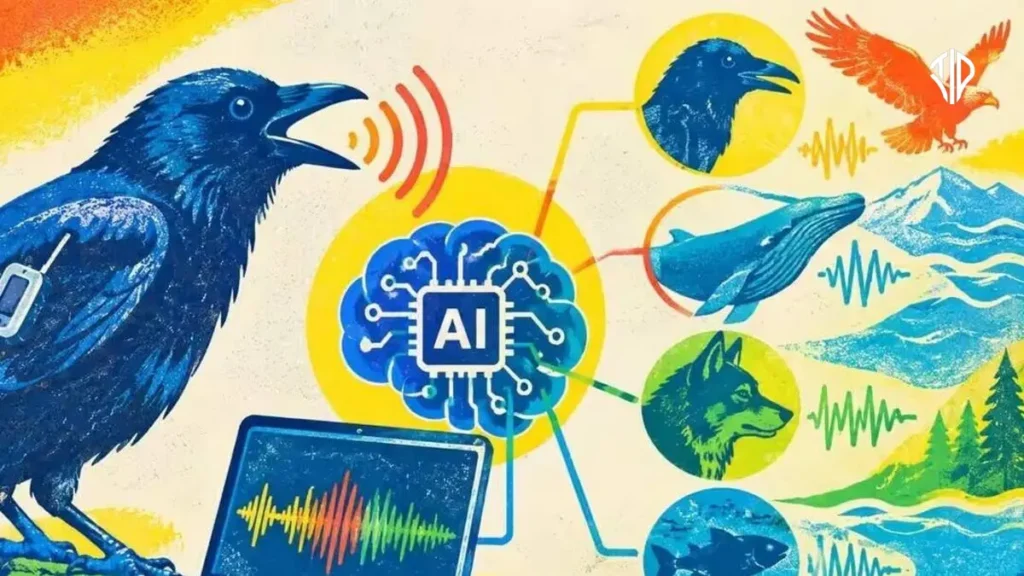
Machine learning models are rapidly shifting from human linguistic tasks to deciphering the natural world. Researchers worldwide are deploying neural networks to catalog, separate, and interpret communication systems across diverse animal species. The accelerating pace of bioacoustic AI has led prominent scientific backers to predict that rudimentary two-way communication could emerge by 2030.
The technical foundation of this effort relies on self-supervised learning algorithms, similar to the architecture underlying modern large language models. Rather than relying on human annotations, these algorithms analyze raw acoustic data to identify latent patterns, repertoires, and contextual variations in non-human vocal signals.
The Shift From Manual Fieldwork to Neural Bioacoustics
Field biologists have historically spent decades manually tagging audio recordings, an approach that limited the scope of acoustic analysis. In Spain, biologists Vittorio Baglione and Daniela Canestrari amassed over 150,000 audio files from carrion crows across years of observation, facing a data volume impossible to parse by hand.
By deploying acoustic foundation models developed by non-profit research groups such as the Earth Species Project, researchers can now automate signal separation. The neural network isolates individual crow calls from complex forest soundscapes, distinguishing chick distress vocalizations from cooperative defense alarms triggered by aerial predators.
How Bioacoustic Foundation Models Parse Animal Audio
Human language relies on symbolic tokens structured by grammar, whereas animal communication represents high-dimensional continuous data. AI models bridge this divide by converting audio spectrograms into dense mathematical vector embeddings.
- Unsupervised clustering maps recurring vocal signatures without requiring prior human assumptions about meaning.
- Source separation algorithms isolate overlapping calls made simultaneously within dense flocks or marine pods.
- Contextual trajectory modeling links specific acoustic sequences to observable behavioral triggers, such as foraging or territory defense.
These computational techniques allow researchers to track subtle shifts in pitch, tempo, and frequency modulation that human ears fail to discern. Similar methods are currently being deployed by initiatives like Project CETI to interpret sperm whale click sequences known as codas.
Why Non-Human Communication Defies Standard NLP
Despite rapid computational progress, animal communication cannot simply be treated as an untranslated foreign dialect. Human speech is almost exclusively acoustic or textual, whereas non-human communication operates across multimodal channels simultaneously.
Terrestrial mammals and birds routinely integrate body postures, chemical pheromones, facial expressions, and plumage coloration into their messaging. Marine mammals combine directional sonar clicks with physical posturing. A neural network trained exclusively on audio streams captures only a fraction of the total informational exchange.
True comprehension requires multimodal models capable of synchronizing multi-camera video, positional telemetry, and environmental telemetry alongside bioacoustic audio feeds. Without situational context, statistical pattern recognition risks confusing acoustic repetition with actual semantic meaning.
The Dual-Use Dilemma of Synthetic Animal Signals
The prospect of decoding animal calls carries severe ecological risks that parallel digital deepfakes in human society. The primary experimental technique used to verify acoustic meaning is playback, where researchers broadcast synthesized calls into natural habitats to observe biological responses.
If synthetic alarm or mating calls are deployed carelessly, they can fracture social cohesion, disrupt breeding cycles, and cause acute distress across local populations. Poachers and commercial harvesters could also exploit generative acoustic tools to lure endangered animals, aggregate fish stocks, or drive territorial predators toward traps.
Leading conservation legal experts emphasize that non-human communication technologies require strict governance frameworks before synthetic generative playback becomes widespread. While AI may unlock unprecedented insights into animal cognition, the technology must prioritize habitat protection over disruptive intervention.
Key Takeaways
- AI Transformation: Neural networks and self-supervised foundation models are replacing manual audio tagging to analyze massive bioacoustic datasets.
- High-Dimensional Parsing: Algorithms convert continuous animal audio into vector embeddings, enabling automated source separation, signal clustering, and trajectory tracking.
- Multimodal Complexity: Non-human communication relies heavily on body language, pheromones, and environment, meaning audio-only models lack complete context.
- Ecological Risks: Synthetic playback tools pose severe threats, including wildlife poaching and ecosystem disruption, highlighting the need for strict governance.
Join our community by subscribing to our Weekly Newsletter to stay updated on the latest AI updates and technologies, including the tips and how-to guides.
Follow us on Instagram (@tid_technology) for more updates in your feed and our WhatsApp Channel to get daily news straight to your Messaging App.
