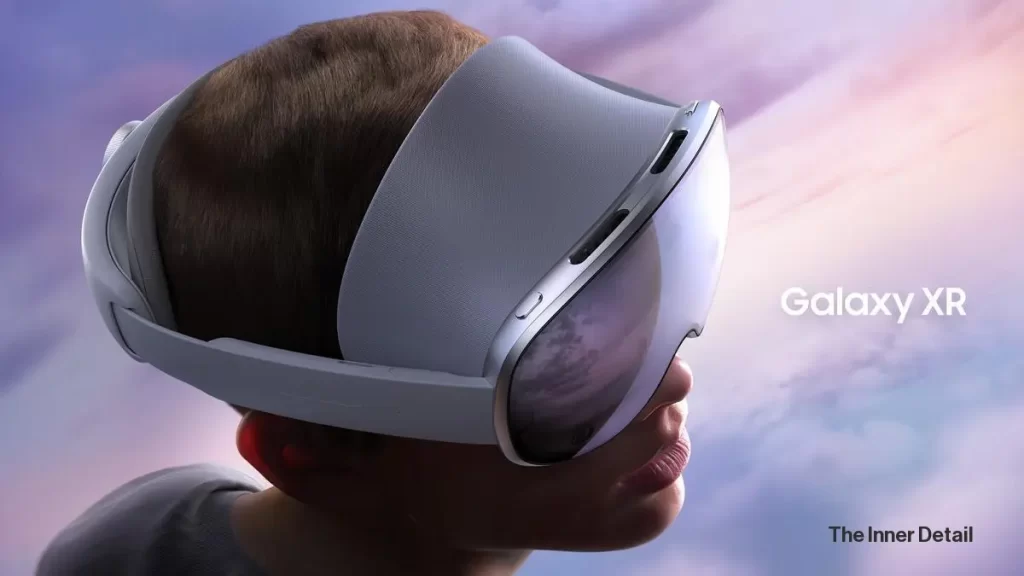
The competitive landscape of Extended Reality (XR) headsets just received a massive shake-up with the introduction of the Samsung Galaxy XR headset. Priced at $1,799, the Galaxy XR is Samsung’s entry into the high-end mixed reality market and is set to challenge dominant devices like the Apple Vision Pro and the mainstream-friendly Meta Quest 3.
The launch of the Galaxy XR is significant because it is the very first device built on Android XR, Google’s new operating system designed for next-generation headsets and glasses. This device is now available for purchase on Samsung.com and in Samsung Experience stores in the US and Korea.
Galaxy XR: The First Android XR Headset
The Samsung Galaxy XR (which was previously known as Project Moohan) positions itself as a premium investment, albeit one that significantly undercuts the competition like the Apple Vision Pro, which costs $3,499.
The true distinguishing factor of the Galaxy XR is its operating system: Android XR. This platform blends digital experiences seamlessly with your physical surroundings. Android XR is built on open standards, supporting tools like WebXR, OpenXR, and Unity, suggesting a strong commitment to innovative future content.
The design of the Galaxy XR features a premium-feeling metal and glass construction. Notably, the headset is designed for comfort; weighing just 545g (1.2 pounds), it is lighter than the Apple Vision Pro, which weighs between 1.65 to 1.76 pounds. It also utilizes a robust harness-style head strap that cups the back of the head, contributing to a secure and less bulky feel.
Detailed Features and Capabilities
The Galaxy XR is packed with high-end specifications and deep software integration intended to transform how users watch, explore, and create.
Stunning Visuals and Hardware
The headset features two micro-OLED displays. These panels offer a substantially higher resolution than those found on the Meta Quest 3. Specifically, the Galaxy XR beams a 3,552-by-3,840 picture (13.6 million pixels) into each eye.
In terms of total pixel count, the Galaxy XR outperforms the Apple Vision Pro, featuring 29 million total pixels compared to the Vision Pro’s 23 million. Powering these visuals is the Snapdragon XR2+ Gen 2 chipset. The device also boasts 16GB of RAM and 256GB of storage. For tracking movement, it includes six motion-tracking cameras, alongside built-in eye tracking and iris recognition.
Seamless Interaction and Workspace
Interaction with the Galaxy XR is intuitive, allowing users to navigate the interface naturally using their voice, hands, and eyes. It utilizes inward-facing cameras for eye tracking and outward-facing cameras for hand tracking, enabling users to interact with content through pinches and taps, similar to the Vision Pro experience. The Galaxy XR also supports peripheral input, allowing users to pair a keyboard and mouse or link their PC for a complete desktop experience.
The headset can create an infinite screen to explore apps. This allows users to arrange multiple apps—such as Chrome tabs, documents, and music apps—in a massive, private workspace around them. It allows for seamless switching between tasks and can be used for taking Google Meet calls where video tiles can be expanded for clarity.
Content, Entertainment, and AI Integration
Since the Galaxy XR runs on Android XR, users can fill their infinite screen with all their favorite apps from Google Play, as every single Google Play app works from day one. Specialized Google apps have been reimagined for XR, including new versions of Google Maps, Google Photos, YouTube, Google TV, Chrome, and Meet.
The device transforms any room into a private theater for unwinding. You can watch movies in Google TV on a massive, resizable screen, or dive into immersive 180 and 360-degree content on YouTube. Furthermore, Google Photos allows you to convert your entire existing library of 2D photos and videos into 3D, letting you step back into your memories.
Crucially, Gemini is built into Android XR. Gemini Live is designed to better understand what you are seeing and doing, allowing for powerful, real-time assistance. For example, you can ask Gemini about the stats of a player on screen while watching basketball highlights.
If your massive workspace becomes cluttered, you can simply say, “Hey Google, organize these windows,” and Gemini will instantly arrange them into a neat layout. Users can also utilize Circle to Search on virtual content or even real-world items in the room to get helpful information without breaking their flow.
Comparison: Galaxy XR vs Vision Pro vs Quest 3
Here is a comparison of the Samsung Galaxy XR against its two main rivals, the high-end Apple Vision Pro and the mainstream Meta Quest 3:
| Feature | Samsung Galaxy XR | Apple Vision Pro | Meta Quest 3 |
| Price | $1,799 | $3,499 | Starts at $499 |
| Operating System | Android XR | visionOS | Meta’s proprietary OS |
| Resolution (Per Eye) | 3552×3840 (29mn pixels) | N/A (23M total pixels) | 2064×2208 |
| Display Type | Micro-OLED | Micro-LED Projectors | LCD displays |
| Max Refresh Rate | Up to 100Hz | Up to 120Hz | Up to 120Hz |
| Chipset | Snapdragon XR2+ Gen 2 | M5 (or M2) + R1 | Snapdragon XR2 Gen 2 |
| RAM | 16GB | 16GB | 8GB |
| Eye Tracking | Yes | Yes | No |
| Weight | 545g (1.2 lbs) | ~1.7 lbs (26.4–28.2oz) | 515g |
| Controllers Included? | No ($249 extra) | No | Yes |
| Battery Life (General) | Up to 2 hours | Up to 2.5 hours (M5) | 2.2 hours |
The Secret Sauce: Why Samsung’s XR Headset Stands Out
While the Samsung Galaxy XR may be significantly more expensive than the Meta Quest 3, it offers specs and features that directly compete with—and in several aspects, surpass—the premium Apple Vision Pro, all at nearly half the cost. The primary reasons the Galaxy XR stands out are its transformative software ecosystem and seamless AI integration.
1. The Open Android XR Ecosystem
The Galaxy XR is the leader for the nascent Android XR ecosystem. Unlike Apple, which is the sole manufacturer of visionOS devices, Android XR is an open mixed reality platform, meaning the software is designed to be easily ported to headsets and smart glasses from other manufacturers in the future. This potential for a wider ecosystem is a massive differentiator.
2. Universal App Compatibility
Samsung and Google have tackled the content problem that held back earlier devices. The Meta Quest family historically prioritized gaming, and Apple made the mistake of allowing developers to opt out of supporting the Vision Pro with existing iOS apps. In contrast, every single Google Play app works on the Galaxy XR from day one. This immediate, comprehensive access to millions of mobile and tablet apps eliminates the concern for buyers that their favorite streaming, productivity, or social apps might never arrive.
3. Gemini as a Virtual Secretary
The deep integration of Google’s AI assistant, Gemini, truly transforms the experience. While Siri is available on the Vision Pro, it currently lacks the conversational and ambient awareness capabilities Gemini offers on the Galaxy XR.
Gemini Live uses awareness of your surroundings to bring helpful new ways to use an AI assistant. It doesn’t just open apps; it interacts with them. The ability to give Gemini a voice command to instantly reorganize a cluttered workspace or use Circle to Search on real-world objects makes the experience feel less like using a computer and more like having a sophisticated virtual partner.
By combining a premium hardware experience (high-resolution micro-OLED displays and superior RAM) with a content-rich, open operating system and unparalleled AI assistance, the Galaxy XR positions itself as the first serious contender to match the technological advances of the Apple Vision Pro while delivering a practical, accessible app library for consumers.
Key Takeaways
- The Samsung Galaxy XR is a new high-end mixed reality headset priced at $1,799, challenging the Apple Vision Pro and Meta Quest 3.
- It’s the first device built on Android XR, Google’s new operating system for next-generation headsets.
- The Galaxy XR boasts high-resolution micro-OLED displays, surpassing both the Apple Vision Pro and Meta Quest 3 in pixel count.
- Deep integration of Google’s AI assistant, Gemini, transforms the user experience, offering real-time assistance and intuitive interaction.
- The open Android XR ecosystem and universal app compatibility provide immediate access to millions of Google Play apps.
Join our community by subscribing to our Weekly Newsletter to stay updated on the latest AI updates and technologies, including the tips and how-to guides.
(Also, follow us on Instagram (@inner_detail) for more updates in your feed and our WhatsApp Channel to get daily news straight to your Messaging App).