
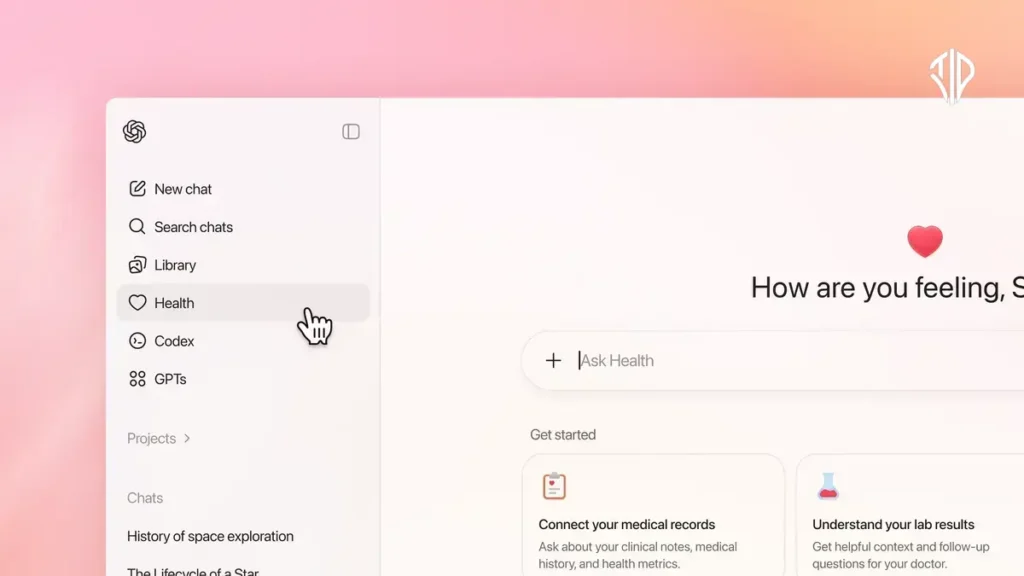
In a significant stride towards democratizing personalized wellness, OpenAI has introduced ChatGPT Health, a revolutionary AI experience designed to seamlessly integrate with your medical records and wellness applications.
This new offering transforms ChatGPT into an even more powerful ally, aiming to empower individuals with comprehensive insights into their health, making them feel more informed, prepared, and confident in managing their well-being.
The digital revolution has steadily reshaped various facets of our lives, and healthcare is no exception. With ChatGPT Health, OpenAI is taking a bold step, allowing users to securely connect their personal health data with the sophisticated intelligence of ChatGPT.
Imagine having a personal health assistant, available 24/7, capable of understanding your unique medical history and providing contextually relevant information. This is the promise of ChatGPT Health.
What is ChatGPT Health? A Glimpse into Personalized Wellness
At its core, ChatGPT Health is an AI experience built within the familiar ChatGPT interface. What sets it apart is its unique ability to link directly with your medical records and data from various wellness apps. This integration allows the chatbot to tap into a wealth of personal health information, offering responses that are far more relevant and tailored to your specific needs than general health advice found online.
Fidji Simo, CEO of applications at OpenAI, articulated the company’s broader vision, stating that “ChatGPT Health is another step toward turning ChatGPT into a personal super-assistant that can support you with information and tools to achieve your goals across any part of your life.”
This move underscores a growing recognition that technology, particularly artificial intelligence, holds immense potential to alleviate the burdens on both patients and healthcare providers.
The Need for AI Support
The challenges within the healthcare system are well-documented, often leaving both patients and doctors feeling overwhelmed. Simo, reflecting on her personal experiences, emphasized this very point, noting that the system isn’t working optimally, prompting both parties to seek assistance from AI tools. The data supports this trend:
- The American Medical Association reported a near doubling in physicians’ use of AI from 2023 to 2024, with 68 percent acknowledging that AI provides them with an advantage in patient care.
- An OpenAI-commissioned survey revealed that three in five US adults had used AI tools for their health or healthcare in the preceding three months, with a remarkable 75 percent finding these tools “very or extremely helpful.”
These statistics highlight a clear demand for intelligent assistance in navigating the complexities of health and wellness, a demand ChatGPT Health aims to meet.
Unwavering Commitment to Privacy and Security
Given the highly sensitive nature of medical information, privacy and security are paramount. OpenAI has engineered ChatGPT Health with robust, layered protections to ensure user data remains safe and confidential. Key security features include:
- Dedicated Space: All health-related files, conversations, and connected apps are stored in a separate, dedicated space within the chatbot, distinct from other chats.
- Purpose-Built Encryption and Isolation: Information and “memories” from ChatGPT Health are securely compartmentalized and will not flow outside of this designated space.
- No Model Training: Crucially, conversations and data from ChatGPT Health will not be used to train OpenAI’s foundational models, preserving the privacy of your personal health journey.
This rigorous approach ensures that users can confidently connect their health data without concerns about widespread data dissemination or unauthorized use.
The Role of ChatGPT Health
It is vital to understand that ChatGPT Health is a support tool, not a substitute for professional medical care. OpenAI has explicitly stated that the service is not intended for diagnosis or treatment. Instead, its purpose is to:
- Help users navigate everyday health questions.
- Make the chatbot’s responses significantly more relevant and useful by grounding them in the user’s personal health information.
- Assist individuals in taking a more active role in comprehending and managing their health and wellness.
Designed in close collaboration with physicians, ChatGPT Health is positioned as a valuable resource that augments a user’s understanding, rather than replacing the critical expertise of clinicians.
Putting You in Control of Your Health Data
To facilitate secure data connectivity, OpenAI has partnered with b.well for health, a digital health platform. This collaboration allows users in the US to explicitly authorize access within ChatGPT, enabling the secure connection of their health data and medical records from various US healthcare providers.
This integration is meticulously designed to put consumers firmly in charge of how and where they safely access their sensitive health information.
Getting Started and Future Horizons
OpenAI is rolling out ChatGPT Health gradually. Interested users can sign up for a waitlist to request access. Once granted, the feature will appear as a dedicated option in the ChatGPT sidebar. While initial capabilities, such as connecting medical records, are currently limited to the US, OpenAI plans to expand availability in the coming weeks, promising a broader global rollout over time.
ChatGPT Health marks a significant evolution in how AI can serve our personal well-being. By securely linking individual health records with cutting-edge AI, OpenAI is opening new avenues for personalized health insights, fostering a more informed and empowered approach to managing one’s health journey.
This is not just an upgrade to a chatbot; it’s a glimpse into the future of proactive, personalized healthcare support.
Key Takeaways
- ChatGPT Health is a new AI experience from OpenAI that integrates securely with personal medical records and wellness applications.
- It empowers individuals with comprehensive, personalized health insights, making them more informed and confident in managing their well-being.
- OpenAI has implemented robust privacy and security measures, including dedicated storage, encryption, and a strict no-model-training policy for health data.
- The service is designed as a support tool to augment understanding, not to replace professional medical care, diagnosis, or treatment.
- Initial availability is for US users to connect health data via a partnership with b.well for health, with plans for broader global expansion.
Join our community by subscribing to our Weekly Newsletter to stay updated on the latest AI updates and technologies, including the tips and how-to guides. (Also, follow us on Instagram (@inner_detail) for more updates in your feed).
(For more such interesting informational, technology and innovation stuffs, keep reading The Inner Detail).