
Scaling Challenges in Modern Artificial Intelligence
As artificial intelligence models scale up in size, traditional dense architectures demand immense computational power for both training and inference. Every token passing through every layer creates severe resource constraints.
The Role of Mixture-of-Experts Architectures
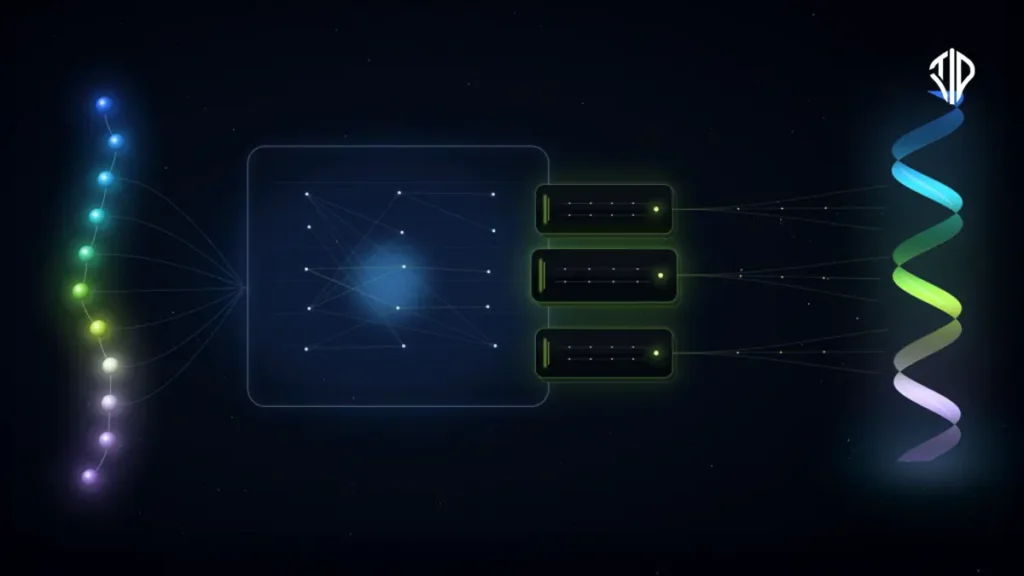
Mixture-of-experts architectures offer an alternative by dividing workloads across multiple subnetworks or experts. Only a small subset of these experts activates for any given token, saving processing power.
This sparse activation strategy allows models to scale capacity efficiently. However, unlocking these benefits depends heavily on the underlying software and hardware implementation.
Engineering Bottlenecks and Optimization Frameworks
Fragmented expert computation often leads to reduced graphics processing unit utilization. Routing tokens between experts introduces communication overhead, while massive parameter footprints create distributed training challenges.
Optimization frameworks like the NVIDIA Transformer Engine help mitigate these engineering bottlenecks. They provide optimized primitives designed specifically for grouped expert computation and low-precision training.
Applications in Computational Biology
Biological foundation models frequently involve massive parameter counts and extended sequence lengths. Applying these advanced training primitives helps maximize hardware efficiency while expanding model capabilities.
As computational biology intersects deeper with deep learning, efficient training infrastructure becomes crucial. Optimizing Mixture-of-Experts workflows accelerates research cycles in genomics and protein engineering.
Key Takeaways
- Traditional dense architectures demand immense computational power as AI models scale.
- Mixture-of-experts architectures use sparse activation to save processing power and scale capacity.
- Optimization frameworks like the NVIDIA Transformer Engine help overcome hardware bottlenecks.
- Efficient training infrastructure accelerates research cycles in genomics and protein engineering.
Join our community by subscribing to our Weekly Newsletter to stay updated on the latest AI updates and technologies, including the tips and how-to guides.
(Also, follow us on Instagram (@tid_technology) for more updates in your feed and our WhatsApp Channel to get daily news straight to your Messaging App).
