
If you haven’t read ‘Part-1’, head on to here!
Ignaz Semmelweis: Pioneering Hand Hygiene for Life-Saving Impact
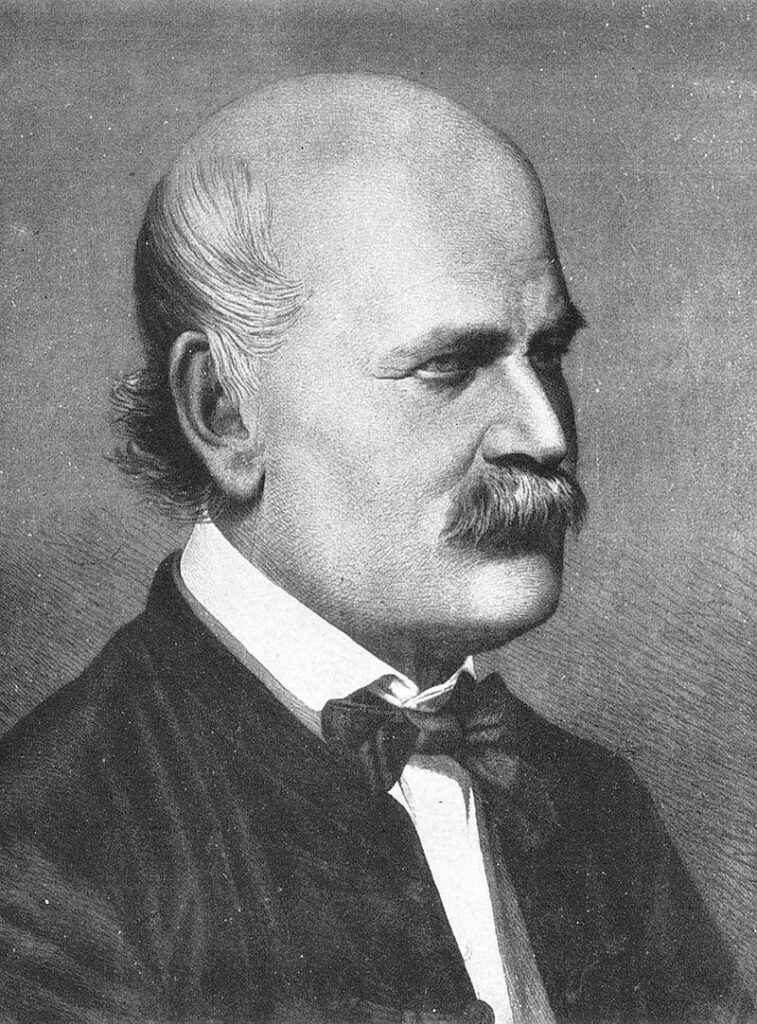

The remarkable impact of a seemingly simple medical belief can often be profound.
Ignaz Semmelweis, an innovative obstetrician specializing in childbirth, observed an alarming and unexplained mortality rate among women in his hospital’s birthing ward.
A prevailing routine among doctors involved attending women in childbirth directly after examining diseased corpses in the mortuary, critically, without adequate handwashing. This practice led to devastating consequences, with one-third of women in the birthing ward succumbing to illness in subsequent months. Over time, Semmelweis made a groundbreaking discovery: when medical professionals meticulously washed their hands before examining or treating patients, the mortality rate for women in his Vienna, Austria, birthing ward drastically decreased. This highlighted the crucial link between hand hygiene and patient survival.
Despite observing the clear positive impact of handwashing, Semmelweis initially lacked the scientific understanding of germ theory to explain why it worked. He simply noted that rigorous hand hygiene prevented patients from falling ill. His mandate for handwashing, introduced in 1847, faced significant opposition and scorn from doctors in other hospitals who dismissed his unconventional ideas. Tragically, by 1865, the persistent rejection of his pivotal work led Semmelweis to severe clinical depression, affecting his behavior. He ultimately fell victim to a scheme orchestrated by another physician, which tragically led to his death in 1865.
Following his demise, the hospital reverted to its previous unsanitary practices, completely abandoning his “crazy” yet life-saving protocols. Consequently, mortality rates surged by a factor of six, yet the medical community largely remained indifferent.
It took until the 1980s, with a series of alarming foodborne outbreaks and healthcare-associated infections sparking widespread public concern, for the United States Centers for Disease Control and Prevention (CDC) to officially recognize and promote hand hygiene as a critical measure to prevent infection spread. Semmelweis’s foresight, though initially dismissed, became a cornerstone of modern public health.
Gregor Mendel: Unraveling the Secrets of Genetic Inheritance
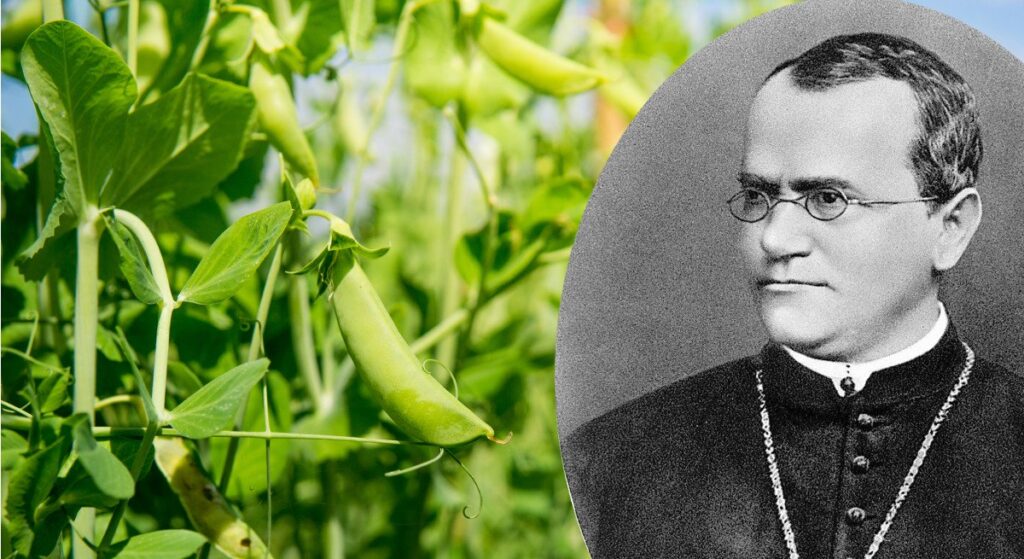
Most individuals recall Gregor Mendel from their elementary science education. Recognized today as the father of modern genetics, Mendel was a Moravian Augustinian friar who engaged in extensive pea plant crossbreeding experiments in his leisure time. While he may not have been widely labeled as a “lunatic” during his era, his groundbreaking experiments and theories were certainly not broadly known or respected within the scientific community.
Mendel’s pioneering work with garden pea plants led to his coining of the terms “recessive” and “dominant” in the context of genetic traits. Despite these pivotal insights, his findings remained largely unacknowledged and were not fully accepted until after his death. Prior to Mendel’s discoveries, the prevailing scientific belief was in “blending inheritance,” where traits from parents were thought to simply average and mix in offspring. Although Mendel passed away in 1884, it was only several decades later, in the early 20th century, that his revolutionary concepts gained recognition and formed the foundation of modern genetics.
Francis Peyton Rous: Uncovering Viruses as Cancer-Causing Agents
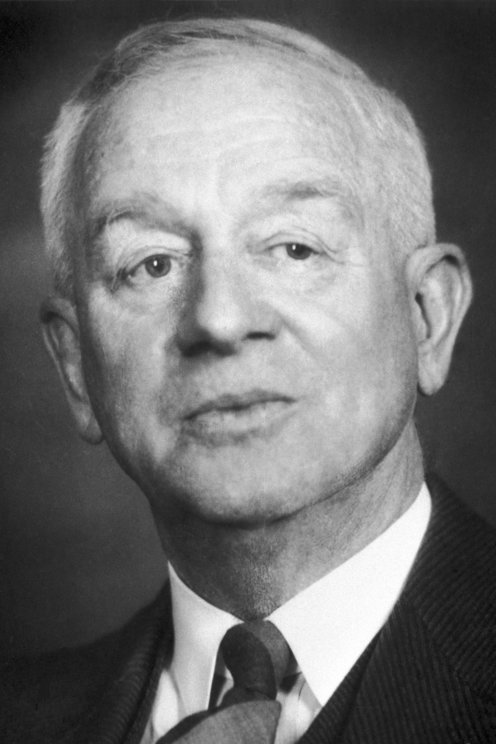
Francis Peyton Rous, a distinguished pathologist, made the groundbreaking discovery that specific viruses could contribute to the development of certain types of cancer. In 1911, during his tenure at Rockefeller University in New York City, Rous observed that a sarcoma (a malignant tumor) found in one chicken could be transmitted to healthy chickens via an injection of a cell-free extract from the original chicken tumor. Despite the significance of this revelation, his initial findings were largely discredited by the scientific community. It wasn’t until more than five decades later, in 1966, that his profound contributions were recognized with the Nobel Prize in Physiology or Medicine.
Rous’s early investigations into transmissible sarcomas revolutionized cancer research by establishing a novel pathway for study: through the involvement of viruses. As a PLOS Blog explains, “Although approximately 20 percent of human cancers are now believed to be linked to viruses, viral-induced cancers are predominantly observed in other animal species. Nevertheless, the insight that viruses can facilitate cancer transmission between animals offered a crucial scientific model. This model enabled researchers to begin unraveling the complex process of cellular transformation from a normal state to a cancerous one.”
Eunice Foote: Pioneering Research on the Greenhouse Effect
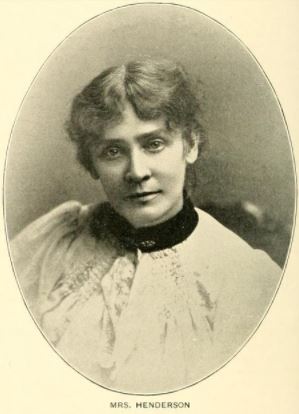

Historically, Irish physicist John Tyndall has been widely credited with the discovery of the greenhouse effect. In 1859, he published significant findings demonstrating how certain gases, like carbonic acid, effectively trap heat, and theorized this process naturally occurs within Earth’s atmosphere, influencing long-term climate change. However, Tyndall’s publication followed by three years a pivotal presentation by American scientist Eunice Foote. At the annual meeting of the American Association for the Advancement of Science, Foote presented a paper that similarly illustrated the heat-trapping capabilities of various gases, including carbonic acid, and proposed its atmospheric impact on Earth’s climate. Due to the prevailing societal norms, as a woman, Foote was not permitted to read her own groundbreaking research. Her paper was presented on her behalf by Professor Joseph Henry of the Smithsonian Institution, who notably prefaced the reading by advocating for gender equality in science. Despite its profound implications, Foote’s paper was not widely disseminated, and after its initial presentation, she unfortunately faded into scientific obscurity for many years.
Alfred Wegener: Advancing the Theory of Continental Drift
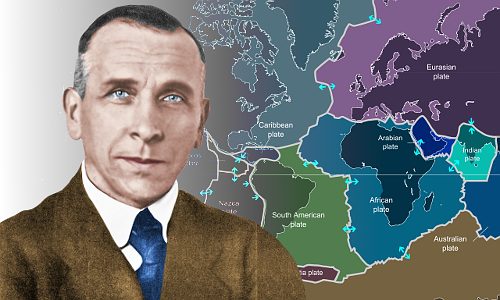
Alfred Wegener, a pioneering geophysicist, advanced the revolutionary hypothesis that Earth’s continents are not static but migrate across the planet’s surface at an incredibly slow pace. He proposed that over geological timescales—millions of years—these landmasses undergo significant displacement. From 1912 to 1929, Wegener meticulously published a wealth of compelling fossil and rock evidence to substantiate his theory of continental drift. Tragically, he passed away during a scientific expedition to Greenland in 1930.
Despite the compelling evidence he presented, Wegener’s theory of continental drift faced widespread rejection from the majority of his scientific peers during his lifetime. It wasn’t until the 1960s, several decades after his death, that mounting evidence from seafloor spreading and plate tectonics finally led to the widespread acceptance of continental drift, solidifying its place as a cornerstone of mainstream geological science.
Part-1 is here! Don’t miss it out😉!
References:
- https://globalhandwashing.org/about-handwashing/history-of-handwashing/
- https://www.famousscientists.org/7-scientists-whose-ideas-were-rejected-during-their-lifetimes/
- https://www.oxford-royale.com/articles/9-scientists-who-didnt-get-credit-deserved/
- https://www.medicaldaily.com/mad-scientist-6-scientists-who-were-dismissed-crazy-only-be-proven-right-years-later-362010
Join our community by subscribing to our Weekly Newsletter to stay updated on the latest AI updates and technologies, including the tips and how-to guides. (Also, follow us on Instagram (@inner_detail) for more updates in your feed).
(For more such interesting informational, technology and innovation stuffs, keep reading The Inner Detail).
