
The global race for artificial intelligence supremacy relies on an astonishingly narrow hardware bottleneck according to recent reports, and at the very center of that bottleneck stands Nvidia. As the primary designer of advanced graphics processing units that power modern large language models, the company holds immense economic and geopolitical leverage.
When security concerns and personal scandals suddenly touch the leadership of such a vital enterprise, the shockwaves extend far beyond corporate boardrooms. Intelligence analysts and technology experts are now examining how leadership instability at Nvidia could alter the delicate technological balance between the United States and international competitors.
The Scarcity of Advanced Semiconductors
Advanced semiconductors are currently the most scarce and sought-after commodity in the technology sector. While software talent, massive data centers, and abundant energy supplies are necessary ingredients for artificial intelligence development, cutting-edge chips remain irreplaceable.
Nvidia currently maintains a near-monopoly on the design of these specialized processors. This positioning turns the corporation into an unexpected gatekeeper for nearly every major artificial intelligence laboratory, hyperscale cloud provider, and sovereign state attempting to build frontier models.
Geopolitical Implications and Security Risks
For geopolitical competitors like China, overcoming this hardware deficit has become an urgent national priority. Due to strict international export controls designed to limit Beijing’s access to bleeding-edge silicon, Chinese artificial intelligence developers have faced severe constraints on their raw computing power.
Security analysts point out that any compromise in corporate security or prioritization fairness at Nvidia could inadvertently benefit competing nations. If companies with alleged foreign ties managed to secure preferential allocation during periods of acute chip scarcity, American labs could face devastating delays in their infrastructure scaling.
Executive Leadership as an Intelligence Asset
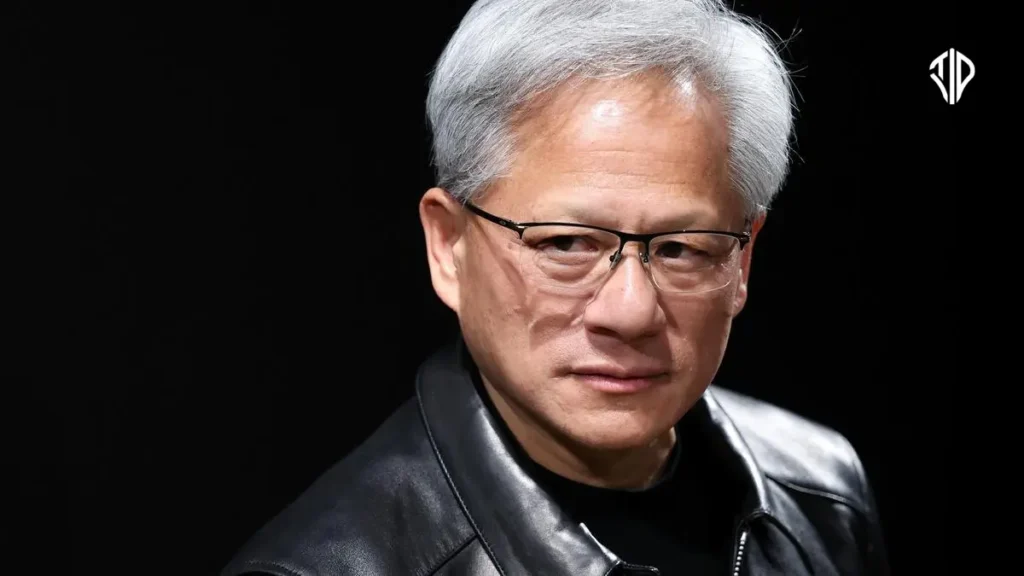
Beyond the physical supply of silicon, the personal network of Nvidia’s long-standing chief executive represents a high-value intelligence asset. Decades of cultivating relationships with world leaders, policymakers, and Silicon Valley pioneers have given leadership an intimate view of American industrial strategy.
Intelligence experts emphasize that modern espionage targeting technology executives rarely focuses solely on stealing hardware blueprints or source code. Instead, gaining insight into private policy discussions, compute capacity expansions, and executive attitudes toward international trade offers strategic advantages that are difficult to quantify.
Governance Crisis and Industry Destabilization
The sudden governance crisis at Nvidia also threatens to destabilize the day-to-day operations of the American artificial intelligence ecosystem. Startups and major enterprises alike depend on predictable hardware roadmaps to train increasingly complex neural networks.
If regulatory investigations consume significant executive bandwidth and slow down product deployments, the entire industry could experience unexpected bottlenecks. Because transitioning computational workloads to alternative hardware architectures requires substantial time, companies have very little short-term flexibility.
Ultimately, this unfolding situation highlights the inherent dangers of technological centralization. When an entire global industry depends so heavily on the operational stability of a single enterprise, any internal disruption immediately transforms into an international security concern.
Key Takeaways
- Nvidia acts as a critical hardware bottleneck and gatekeeper for global artificial intelligence development.
- Leadership instability and security concerns create vulnerability across international supply chains and geopolitical boundaries.
- Strict export controls make advanced semiconductor allocation a matter of high national priority for competing nations like China.
- Corporate executives function as high-value intelligence targets due to their deep connections with policymakers and strategic industry players.
- Centralization of chip design exposes the broader artificial intelligence ecosystem to severe operational disruptions during governance crises.
Join our community by subscribing to our Weekly Newsletter to stay updated on the latest AI updates and technologies, including the tips and how-to guides.
(Also, follow us on Instagram (@tid_technology) for more updates in your feed and our WhatsApp Channel to get daily news straight to your Messaging App).
