
Recent Financial Filings and AI Spending
Recent financial filings provide a detailed look at how technology giants manage massive capital investments. Microsoft spent $45.2 billion on capital expenditures and finance leases during the September quarter, falling short of the $51.7 billion forecasted by analysts.
This unexpected deficit raised immediate questions across the industry about whether the tech sector is finally cooling its aggressive artificial intelligence spending. However, a closer look reveals that the shortfall stems from logistical delays rather than a sudden strategic retreat.
Infrastructure Bottlenecks and Supply Chain Challenges
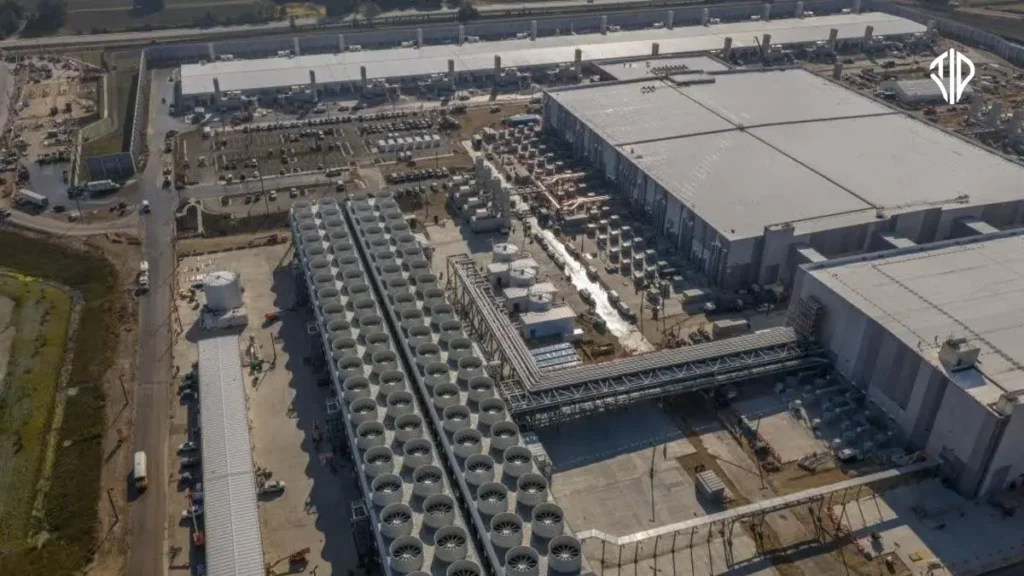
The primary driver behind the delayed capital expenditure is a series of bottlenecks in data center construction and hardware delivery. Third-party data center providers are struggling to bring new facilities online as scheduled.
These delays have pushed anticipated expenditures into the second half of the fiscal year. Microsoft leadership noted that spending will accelerate significantly once those facilities finally launch, driven largely by climbing memory hardware costs.
Building the physical foundation for modern generative intelligence requires unprecedented amounts of electricity and specialized real estate. Power constraints have become a severe limitation for major cloud providers across the globe.
For instance, Microsoft recently abandoned a capacity agreement with Nscale due to local power limitations. Meanwhile, facilities managed by partners like Nebius in New Jersey are progressing much slower than initially anticipated.
Industry-Wide Expansion and Commercial Returns
These physical and electrical realities are not unique to Microsoft. Industry peers face identical challenges while attempting to scale their computational capacity to meet surging demand for artificial intelligence tools.
Amazon is reportedly stockpiling billions of dollars worth of advanced Nvidia hardware racks simply because some new facilities lack the electrical grid capacity to power them. Alphabet continues to invest heavily while posting negative free cash flow, illustrating the immense financial weight of the infrastructure race.
Despite these physical roadblocks, the demand for cloud capacity remains remarkably high. Microsoft Azure revenue climbed 48 percent to reach $33.2 billion during the same quarter, proving that massive infrastructure investments continue to yield substantial commercial returns.
The race to secure computing power has also forced companies to diversify their approach beyond internal construction. Microsoft has signed more than $80 billion in contracts with smaller cloud operators since 2023 to secure necessary resources.
The Future of AI Capital Expenditure
Navigating this complex hardware landscape requires balancing aggressive technological expansion with acute supply chain management. As data center construction catches up with demand in the coming months, capital expenditure is expected to surge past previous records.
Understanding these capital expenditure patterns provides vital insight into how the technology industry sustains its rapid evolution. The artificial intelligence boom is limited less by ambition and capital than by the physical speed at which power grids and data centers can be built.
Key Takeaways
- Microsoft spent $45.2 billion on capital expenditures and finance leases in the September quarter, missing the $51.7 billion analyst forecast due to logistical delays.
- Data center construction bottlenecks, hardware delivery issues, and severe power constraints are slowing down physical expansion globally.
- Major tech companies like Amazon and Alphabet face identical hurdles, such as grid capacity limitations and negative free cash flow.
- Despite physical roadblocks, Microsoft Azure revenue surged 48 percent to $33.2 billion, proving massive infrastructure investments yield strong returns.
- The AI boom is currently limited by the physical speed of power grid and data center construction rather than ambition or available capital.
Join our community by subscribing to our Weekly Newsletter to stay updated on the latest AI updates and technologies, including the tips and how-to guides.
(Also, follow us on Instagram @tid_technology for more updates in your feed and our WhatsApp Channel to get daily news straight to your Messaging App).
