
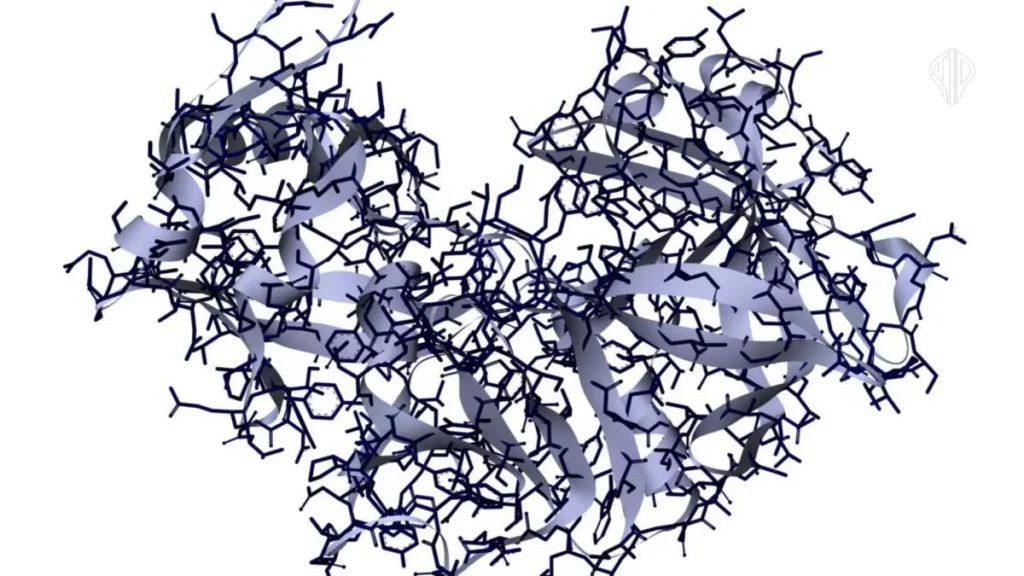
Recent scientific breakthroughs have demonstrated that artificial intelligence can now be deployed to engineer synthetic proteins designed to cleave other proteins with remarkable precision. According to recent scientific findings, these computational tools are successfully creating molecular machinery capable of breaking chemical bonds that remain stable in nature for hundreds of years. This milestone bridges the gap between digital generative modeling and physical biochemistry, changing how scientists approach molecular design.
Proteins are complex molecules made up of long chains of amino acids that fold into intricate three-dimensional shapes. Their specific shapes dictate their functions, whether they are transporting oxygen in the blood or acting as enzymes to speed up chemical reactions. Traditionally, scientists spent decades discovering natural enzymes or using trial-and-error methods to modify them for specific industrial tasks. Generative artificial intelligence shortens this timeline by predicting entirely new amino acid sequences from scratch.
Understanding Molecular Scissors
To appreciate the significance of this development, it helps to understand how biological enzymes function. Enzymes act as biological catalysts that accelerate chemical reactions by lowering the activation energy required. Proteases are a specific class of enzymes that function like molecular scissors, cutting peptide bonds that hold amino acid chains together.
Nature has evolved powerful proteases, but many stable proteins, such as collagen or certain structural polymers, possess chemical bonds that resist standard enzymatic degradation. Designing custom proteases to target these resilient structures has long remained a central challenge in biochemistry. Artificial intelligence models bypass natural evolutionary limitations by calculating optimal molecular structures digitally before synthesizing them in a laboratory.
How Generative AI Designs Proteins
Generative AI models trained on vast databases of known protein structures, such as AlphaFold and specialized diffusion models, learn the fundamental grammar of protein folding. When researchers prompt these systems to design a protein that targets a specific molecular structure, the AI generates thousands of candidate sequences.
The software simulates how these candidate proteins interact with target molecules in virtual space. Researchers then filter these digital designs based on stability, binding affinity, and catalytic potential. Once promising candidates are identified, automated laboratories synthesize the corresponding DNA sequences, allowing living cells to manufacture the designed proteins for physical testing.
Real-World Applications and Implications
The ability to create custom protein-cleaving tools opens up extraordinary possibilities across multiple industries. In medicine, precision proteases could be engineered to target and dismantle pathological protein aggregates associated with neurodegenerative disorders like Alzheimer’s or Parkinson’s disease. By clearing these stubborn cellular blockages, new targeted therapies could emerge.
In environmental science, synthetic enzymes offer promising solutions for waste management and recycling. Many synthetic materials and stubborn biological wastes persist in ecosystems because natural decomposers lack the specific enzymes to break their stable bonds. Tailor-made AI proteins could theoretically degrade persistent pollutants or upcycle complex plastic waste into reusable chemical components.
Challenges and Future Outlook
Despite these promising advances, engineering proteins with AI remains an evolving scientific discipline. Translating digital designs into physical reality often requires iterative refinement, as real-world cellular environments can introduce unexpected variables. Furthermore, ensuring that synthetic enzymes do not interact off-target with essential human proteins is a vital safety consideration for future therapeutic applications.
As computational power increases and training datasets expand, the accuracy and reliability of AI protein design tools will continue to improve. This convergence of artificial intelligence and biotechnology marks the beginning of an era where bespoke biological machinery can be programmed as easily as computer code.
Key Takeaways
- Artificial intelligence is now successfully deployed to engineer synthetic proteins that cut up other proteins with extreme precision.
- Generative AI models bypass trial-and-error biochemistry by predicting completely new amino acid sequences from scratch.
- Precision proteases offer major breakthroughs in medicine by targeting pathological protein aggregates in neurodegenerative diseases.
- Synthetic enzymes provide sustainable environmental solutions for degrading persistent pollutants and upcycling complex plastic waste.
- Future development focuses on refining cellular translation accuracy and preventing off-target interactions with essential human proteins.
Join our community by subscribing to our Weekly Newsletter to stay updated on the latest AI updates and technologies, including the tips and how-to guides.
Also, follow us on Instagram (@tid_technology) for more updates in your feed and our WhatsApp Channel to get daily news straight to your Messaging App.
