
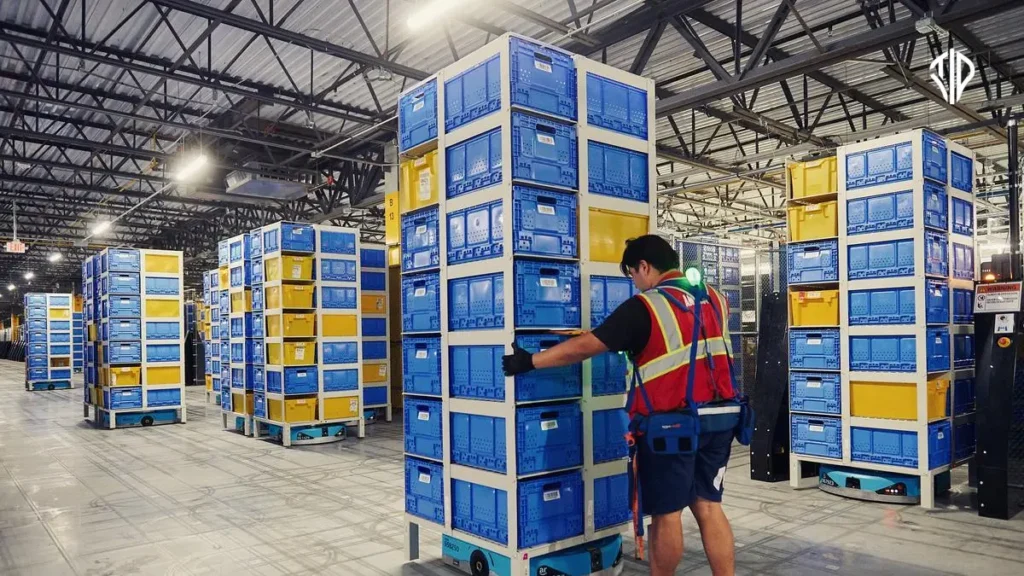
As large-scale automation accelerates across global supply chains, recent industry analysis reveals that Amazon now relies on a workforce of over one million operational robots. This milestone marks a monumental shift in how modern commerce handles heavy fulfillment logistics. The integration of advanced robotic arms and autonomous mobile units has transformed massive distribution centers into hyper-efficient spaces.
This rapid expansion of machine labor across the retail giant’s facilities makes it the second-largest corporate employer in the United States. While efficiency reaches unprecedented levels, the central question remains how this massive pivot impacts human workers. Rather than simply replacing people, the company is attempting to redefine the boundaries where automated systems take over repetitive physical tasks.
Understanding Warehouse Automation
Traditional fulfillment centers required human operators to walk miles each day, lifting heavy bins and manually sorting packages. Today, advanced mobile robots glide across restricted warehouse floors, bringing entire storage pods directly to human station workers. This technology significantly reduces physical fatigue and accelerates processing times during peak shopping seasons.
Amazon has also introduced specialized robotic arms capable of identifying, grasping, and sorting millions of unique inventory items. These robotic systems use advanced computer vision and machine learning models to handle delicate goods without causing damage. The integration of these technologies allows facilities to scale operations rapidly without relying solely on expanding human headcount.
The Changing Nature of Human Work
The arrival of one million robots does not necessarily mean an immediate mass displacement of human labor. Instead, the nature of warehouse jobs is undergoing a profound structural evolution. Human employees are transitioning away from strenuous physical tasks toward oversight, maintenance, and technical troubleshooting roles.
Workers are increasingly trained to manage robotic fleets, handle mechanical jams, and supervise automated sorting lines. These new roles require digital literacy and mechanical problem-solving skills rather than pure physical endurance. This shift opens up opportunities for upskilling, though it also creates a widening skills gap within the traditional labor market.
Economic and Industry Implications
The broader retail and logistics industry is watching Amazon’s massive robotics deployment very closely. When a corporate titan of this scale successfully automates core operations, competing companies face intense pressure to adopt similar technologies. This competitive race threatens to accelerate automation timelines across the entire global supply chain sector.
Economists and labor experts continue to debate the long-term net effect on employment stability. While lower operational costs can benefit consumers through faster shipping and lower prices, the social cost of displaced manual labor remains a serious concern. Policymakers and industry leaders are actively discussing new frameworks to protect workers during major technological transitions.
Looking Ahead at Human-Robot Collaboration
The future of modern warehousing points toward seamless collaboration between human intelligence and machine precision. Robots excel at repetitive heavy lifting, tireless continuous operation, and precise data processing. Humans provide the critical thinking, adaptability, and complex problem-solving skills that automated systems still cannot replicate.
Balancing technological progress with workforce welfare will define the next decade of industrial evolution. As these systems grow more sophisticated, companies must prioritize continuous education and ethical deployment strategies. Ultimately, the success of this robotic revolution depends on how well society supports the workers navigating these unprecedented workplace changes.
Key Takeaways
- Amazon now operates over one million robots across its fulfillment facilities, making it the second-largest corporate employer in the United States.
- Warehouse roles are shifting from strenuous physical labor toward technical oversight, robotic fleet management, and system maintenance.
- Advanced computer vision and machine learning enable robotic arms to safely handle delicate inventory items without human intervention.
- The rapid adoption of supply chain automation is placing intense pressure on competing retailers to modernize their own logistics operations.
Join our community by subscribing to our Weekly Newsletter to stay updated on the latest AI updates and technologies, including the tips and how-to guides.
(Also, follow us on Instagram (@tid_technology) for more updates in your feed and our WhatsApp Channel to get daily news straight to your Messaging App).
