
Building robots for the physical world requires extensive testing inside advanced simulation environments like NVIDIA Isaac Sim or Isaac Lab. Yet, developers often encounter a frustrating bottleneck long before training even begins.
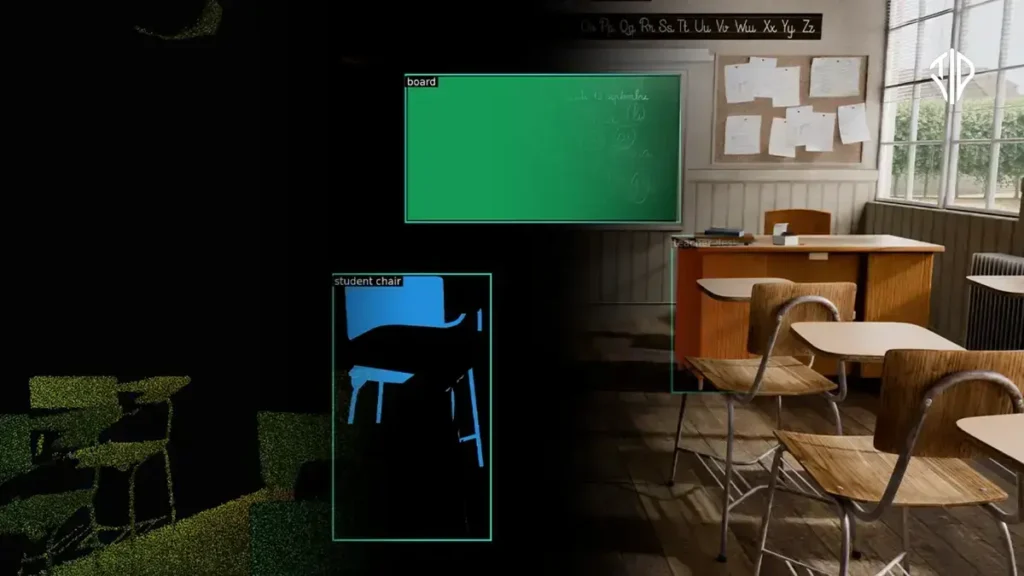
The core challenge lies in getting a 3D scene into a simulation-ready state. While 3D artists build detailed environments in tools like Blender, those assets lack the necessary physics properties, semantic labels, and collision meshes required for accurate robotics training.
Manually preparing these digital twins is laborious and time-consuming. This tedious prep work is precisely where agentic AI workflows can step in to streamline engineering pipelines and accelerate physical AI development.
Understanding the Simulation Readiness Bottleneck
A typical 3D environment contains rich visual assets, but it is not automatically usable for physics-based simulation. Before a robot can navigate or interact with a virtual room, the scene must undergo rigorous preparation.
Developers must ensure objects are accurately labeled and collision geometries are correctly defined. Sensors must be placed, materials configured, and assets cleanly exported to OpenUSD formats without errors.
When this work falls entirely on robotics simulation engineers, it creates project delays. Automating these repetitive validation and authoring tasks allows engineering teams to focus on core robot policies and training loops instead of manual asset cleanup.
How Agentic AI Workflows Transform Scene Preparation
General-purpose reasoning models can easily recognize that a 3D scene needs modification, but true assistance requires tool integration. By combining orchestration models with specialized subagents, developers can execute complex scene transformations automatically.
In a typical multi-agent architecture, a primary orchestrator coordinates the high-level workflow and interprets overall objectives. Specialized subagents then perform specific jobs, such as inspecting geometry, assigning semantic tags, or configuring rigid-body physics.
These subagents rely on specialized software libraries to directly inspect and modify scene files. Safe and mechanical fixes happen automatically, while ambiguous design choices are escalated to human developers for final approval.
The Role of NVIDIA Omniverse Libraries and OpenUSD
Connecting AI reasoning to 3D scenes requires standardized data formats and robust developer toolkits. OpenUSD serves as the foundational data framework for establishing shared scene structures and passing assets seamlessly between tools.
NVIDIA Omniverse Libraries provide the programmatic hooks that agents require to act on a scene. Toolsets handle everything from physics authoring and visual preflight rendering to automated SimReady compliance checking.
By uniting orchestration models, agent frameworks, and Omniverse tools, developers can convert a simple prompt into an automated engineering pipeline. This approach replaces manual troubleshooting with repeatable validation gates and structured multi-agent execution.
Key Takeaways
- Preparing 3D scenes for physical AI simulation is traditionally a manual, time-consuming bottleneck for developers.
- Agentic AI workflows utilize orchestration models and specialized subagents to automate geometry inspection, semantic labeling, and physics configuration.
- OpenUSD and NVIDIA Omniverse Libraries supply the programmatic hooks and data frameworks necessary for agents to interact directly with 3D environments.
- Automating simulation readiness allows engineering teams to shift their focus toward core robot policies and training loops.
Join our community by subscribing to our Weekly Newsletter to stay updated on the latest AI updates and technologies, including the tips and how-to guides.
(Also, follow us on Instagram (@tid_technology) for more updates in your feed and our WhatsApp Channel to get daily news straight to your Messaging App).
