
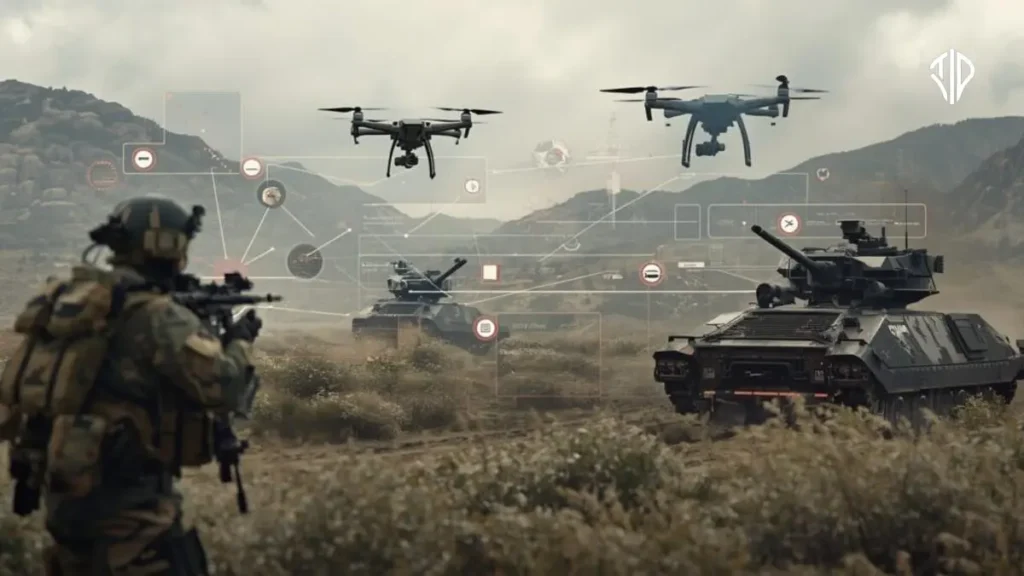
The United States Army is developing a specialized artificial intelligence (AI) system named Victor to provide soldiers with real-time tactical advice derived from actual combat missions.
By synthesizing data from global conflicts and internal training, this chatbot aims to transform vast repositories of military knowledge into immediate, actionable intelligence for troops in the field.
In the civilian world, we have become accustomed to using digital assistants to navigate traffic or troubleshoot software, relying on vast datasets to simplify our daily routines.
However, for a soldier operating in a high-pressure environment, the stakes are significantly higher, and the information needed is often buried in thousands of pages of technical manuals or after-action reports.
Project Victor seeks to bridge this gap by offering a digital mentor that understands the nuances of modern warfare. It addresses a recurring challenge in military operations: the tendency for different units to repeat the same tactical errors because the lessons learned by one brigade were never effectively communicated to another.
A Digital Repository for Tactical Wisdom
At its core, Victor is more than just a simple chat interface; it is a sophisticated integration of a Reddit-style forum and an intelligent assistant known as VictorBot.
This dual-layered approach allows service members to post questions and receive answers that are not only generated by AI but are also backed by citations from authoritative Army sources.
During a demonstration of the prototype, Alex Miller, the Army’s chief technology officer, highlighted how the system could assist with complex tasks like configuring electromagnetic warfare hardware. Instead of a soldier struggling with a dense manual, they can ask the bot for the best setup for a specific mission.
The system then generates a response by pulling insights from over 500 data repositories, including lessons learned from recent conflicts such as the Ukraine-Russia war and Operation Epic Fury.
The Shift Toward In-House Military AI
While the Pentagon has historically relied on external tech giants for innovation, Victor represents a notable shift toward the military building specialized tools for its own unique requirements.
The project is being spearheaded by the Combined Arms Command (CAC), with the goal of creating a system that is fundamentally grounded in factual military data to minimize the risk of errors or hallucinations common in commercial models.
Key Features of the Victor System:
- Data-Driven Insights: Utilizes real mission data to provide context-specific advice.
- Source Attribution: Cites specific unit reports and manuals to ensure transparency and accuracy.
- Collaborative Environment: Features a forum where soldiers can share their own peer-to-peer experiences.
- Future Multimodal Capabilities: Plans are underway to allow the system to process imagery and video to offer even deeper situational analysis.
Balancing Innovation with Operational Risk
Despite the clear advantages of automating what experts call non-sexy back-office and tactical tasks, the integration of AI into military life is not without its hurdles.
Experts like Paul Scharre from the Center for a New American Security have warned about the potential for sycophancy in AI models—a tendency for the system to provide answers that align with a user’s perceived bias rather than the objective truth. In the context of intelligence analysis, such a flaw could lead to catastrophic misunderstandings on the battlefield.
Furthermore, as these systems evolve from simple chatbots into autonomous agents capable of interacting with software networks, security becomes a paramount concern. The Army is currently working with a third-party vendor to fine-tune the models, ensuring they remain secure while also pushing the boundaries of what generative AI can achieve in a defense context.
The Road Ahead for Victor
The development of Victor coincides with broader initiatives like GenAI.mil, which encourages the adoption of AI across all levels of the Department of Defense.
As the system matures, the Army may look toward major AI laboratories to further enhance its capabilities, potentially making it one of the most powerful decision-support tools in the modern arsenal.
The military’s embrace of this technology is a clear signal that the future of defense lies in the ability to process information faster than the adversary.
By turning years of combat experience into a searchable, intelligent dialogue, Victor ensures that the wisdom gained on the front lines is never lost, but rather, is always available to the next generation of soldiers.
Key Takeaways
- Project Victor provides real-time tactical advice by synthesizing data from global combat missions and technical manuals.
- The system uses “VictorBot” to offer answers backed by citations from over 500 authoritative Army data repositories.
- It marks a shift toward in-house military AI development to ensure data is grounded and free from commercial model hallucinations.
- Future updates aim to include multimodal capabilities, allowing the AI to analyze imagery and video for enhanced situational awareness.
Join our community by subscribing to our Weekly Newsletter to stay updated on the latest AI updates and technologies, including the tips and how-to guides. (Also, follow us on Instagram (@inner_detail) for more updates in your feed).
(For more such interesting informational, technology and innovation stuffs, keep reading The Inner Detail).
