
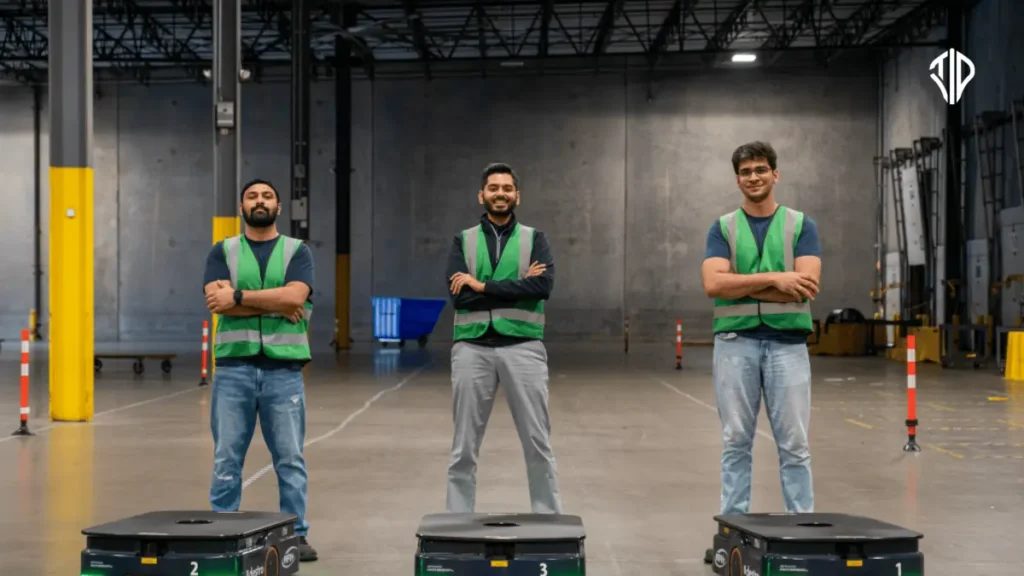
The challenge of warehouse automation has long centered on building better hardware, but a new startup is arguing that the real breakthrough lies in software orchestration. Instead of designing another robotic arm or autonomous mobile chassis, Destro has introduced an artificial intelligence layer designed to make machines and humans work in sync. By addressing the operational coordination between human laborers and automated systems, the company secured an $8 million seed round to scale its logistics platform.
Most contemporary robotics developers concentrate heavily on the physical form factor or training vision-language models to guide metal hands through repetitive tasks. However, these hardware-first companies often struggle with the messy reality of dynamic warehouse floors where unpredictable human actions collide with rigid machine schedules. Destro approaches this challenge from the opposite direction by building an intelligence layer that treats human workers and robots as cooperative peers within the same workflow ecosystem.
The Software-First Philosophy in Logistics
The core thesis behind this approach is that deploying a functional robot requires managing the entire operational environment rather than just the machine itself. Warehouses are complex ecosystems where inventory management, shifting priorities, and human breaks create constant variability. Traditional automation systems often fail because they lack the contextual awareness to adapt when a human worker steps into a robot’s path or falls behind on a packing line.
By focusing purely on software, the platform can ingest operational data from diverse hardware setups and translate those insights into actionable instructions for both automated systems and human personnel. This dual-direction guidance ensures that robots do not sit idle waiting for cleared paths, while human workers receive clear cues on when to assist, intercept, or oversee automated tasks.
Coordinating Human and Machine Labor
In a typical fulfillment center, introducing robots often creates friction as human staff must learn to work around automated machinery that operates on entirely different logic. Destro bridges this divide by acting as a real-time dispatcher for the entire floor. If a robotic picker encounters an ambiguity it cannot resolve, the system immediately routes the exception to the nearest qualified human worker while simultaneously adjusting traffic patterns for other nearby robots.
This level of coordination reduces the bottlenecks that typically plague automated logistics environments. Rather than viewing humans and robots as separate entities operating in partitioned zones, the software treats the workforce as an integrated team. This perspective shifts the industry conversation away from pure replacement toward collaborative productivity.
Industry Implications and Future Outlook
The emergence of software-centric orchestration layers highlights a broader evolution in the automation sector. As physical hardware becomes increasingly commoditized, the primary competitive advantage shifts to the intelligence that coordinates operations. Investors are clearly recognizing this shift, as evidenced by the startup’s successful seed round in a cautious venture capital climate.
If this software-first model proves successful across large-scale logistics operations, it could pave the way for broader adoption in manufacturing, retail fulfillment, and supply chain management. By making robots easier to integrate without requiring a complete redesign of existing human-centric workflows, companies can lower the barriers to entry for advanced automation.
Key Takeaways
- Destro secures an $8 million seed round for a software-first automation approach.
- The platform treats human laborers and robots as cooperative peers in the same workflow ecosystem.
- Real-time dispatching routes exceptions to human workers while adjusting robot traffic dynamically.
- Software orchestration shifts the industry focus from hardware replacement to collaborative productivity.
Join our community by subscribing to our Weekly Newsletter to stay updated on the latest AI updates and technologies, including the tips and how-to guides.
(Also, follow us on Instagram @tid_technology for more updates in your feed and our WhatsApp Channel to get daily news straight to your Messaging App).
