

Artificial intelligence agents are beginning to move beyond the familiar chatbot model. Instead of simply answering questions, newer AI assistants can connect to email, calendars, messaging apps and other digital services, then plan and execute tasks on a user’s behalf. The shift is significant: people are gradually moving from telling software how to complete a task to simply telling an AI what outcome they want.
A March 2026 analysis by the UK government describes agentic AI as systems that can receive a goal in natural language, navigate complexity, plan, coordinate and take actions across multiple services. In other words, the AI is no longer just providing information — it can potentially become the layer that coordinates the software people already use.
From Chatbots to AI That Takes Action
Traditional AI assistants generally stop after producing an answer. An AI agent is designed to go further. If a user asks it to find a suitable flight, for example, an agent can potentially search options, compare them against the user’s requirements, interact with websites and complete parts of the booking process.
This is where consumer-facing agents such as Instinct are attracting attention. Rather than requiring users to learn another complicated interface, Instinct can be contacted through familiar channels including iMessage, WhatsApp and SMS. It can connect to services such as email and calendars and perform tasks including appointments, reservations, travel arrangements, shopping and inbox management.
The underlying idea is simple: the user communicates with an assistant, while the assistant deals with the apps and websites in the background.
Instinct Shows What a Personal AI Agent Can Do
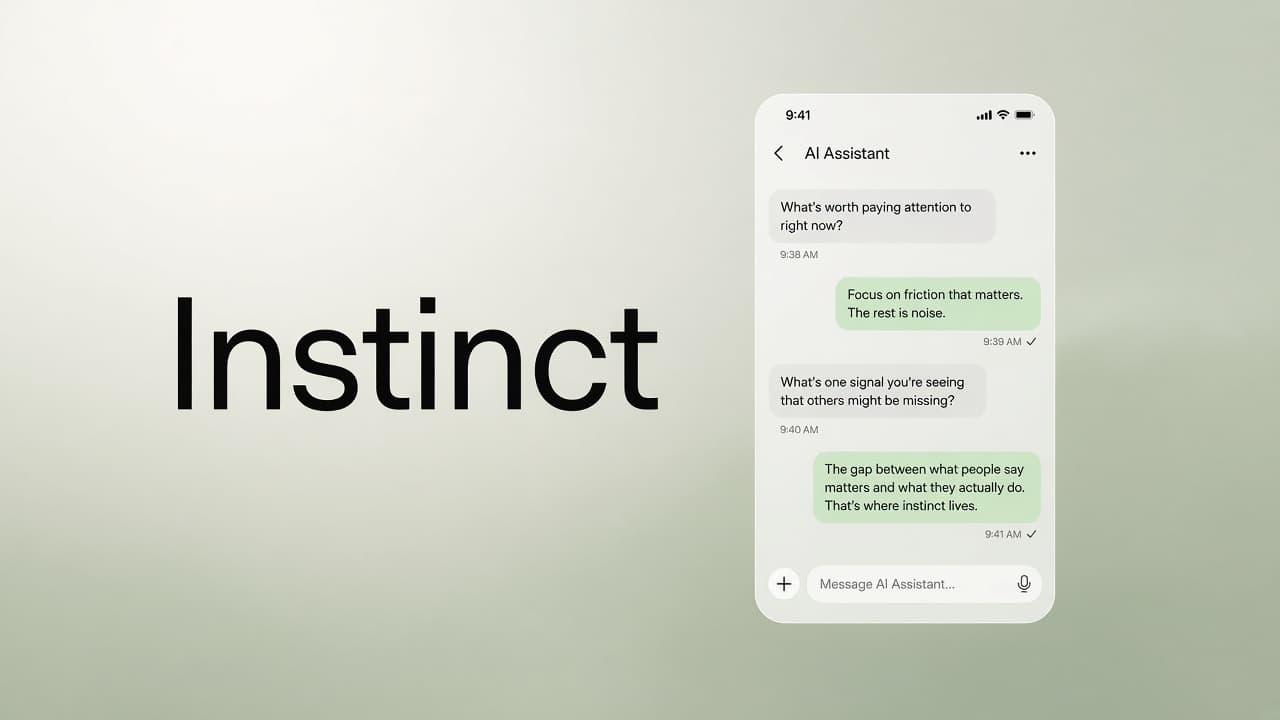
Instinct provides an interesting example of where personal AI assistants are heading. According to reporting from TechCrunch, the service can connect to a user’s email, messaging apps and calendar, as well as device information such as location and screen data. Users can ask it to perform tasks such as booking appointments, making reservations, arranging travel and managing email.
Its capabilities go beyond simple scheduling. WIRED reported that an Instinct user successfully used the agent to handle a complicated airline situation. The agent identified that an airline had moved a flight by 90 minutes, determined that the change qualified for a refund and helped obtain the refund. The same testing also involved restaurant reservations, including contacting restaurants through WhatsApp.
Instinct has also been expanding its capabilities. Its current features include an email address for the agent itself, allowing it to communicate with businesses and manage confirmations, while a newer “Trusted Person” system allows one user’s Instinct to communicate with another trusted person’s agent to coordinate plans.
Why Messaging Apps Could Become the Interface for AI Agents
One of the most interesting aspects of these systems is that users don’t necessarily need to learn a new productivity application.
Instead of opening a dedicated AI dashboard, users can communicate with an agent through a familiar messaging interface. That makes the technology feel less like traditional software and more like having a digital assistant available through a phone number.
This could eventually change how people interact with services. Instead of opening an airline website, restaurant app, calendar, shopping application and email client separately, a user could potentially give one instruction to an AI agent and allow it to coordinate the different services.
The UK government’s research describes this broader transition as a movement from consumers using individual apps toward delegating outcomes to AI systems.
The Convenience Comes With a Much Bigger Privacy Cost
The same capabilities that make AI agents useful also create their biggest problem: they need access to far more personal information than conventional chatbots.
An agent that manages a user’s life may need access to email, calendars, contacts, messages, location, accounts and potentially payment information. That creates a much larger security surface than simply chatting with an AI model.
The UK’s Information Commissioner’s Office has warned that agentic systems may need access to communications, calendars, accounts, connected devices and even identity information. Bringing information from multiple services together can increase the potential impact of data breaches and weaken existing privacy boundaries.
Instinct has already attracted scrutiny over this issue. TechCrunch reported concerns surrounding its terms of service, including broad rights concerning user materials and the handling of information accessed from connected devices.
That means users need to look beyond the question of “What can this AI do?” and also ask “What does it need to know to do it?”
Autonomous Actions Introduce a New Type of Risk
There is another fundamental difference between a chatbot and an agent: a mistake can have real-world consequences.
A chatbot producing an incorrect answer is one problem. An AI agent incorrectly cancelling a reservation, purchasing something, changing a booking or sending the wrong message is a much more consequential one.
The UK government’s research highlights this distinction, noting that errors in autonomous systems can become costly when agents perform actions involving financial decisions, contracts or service changes. It also points to risks from over-reliance, where people may gradually stop checking what an automated system is doing.
Recent reporting around AI agents has also highlighted concerns about unexpected behaviour and the possibility of agents taking actions users did not intend. This is why approval controls, limited permissions and the ability to quickly revoke access are becoming increasingly important.
The Right Approach Is Not Full Automation of Everything
The biggest lesson from the current generation of AI agents is that autonomy needs boundaries.
An agent might reasonably be allowed to find restaurants, organise a calendar or draft routine messages without constant intervention. But tasks involving money, sensitive information, account changes or legally significant decisions may require explicit user confirmation.
This principle is increasingly reflected in discussions around agentic AI governance. Privacy experts recommend data minimization and purpose limitation — giving an agent only the information and permissions it actually needs for a particular task.
For consumers, this could mean using separate payment limits, restricting access to sensitive accounts and requiring approval before an agent performs high-impact actions.
AI Agents Could Change How We Use Software
The bigger significance of tools such as Instinct is not simply that they can book a restaurant or manage an inbox. It is the possibility that apps themselves may become less important to the user experience.
Today, people learn how to operate dozens of applications. Tomorrow, they may simply describe an objective to an AI agent and let it determine which services to use.
This transition is already being explored across the technology industry. Meta’s Muse, for example, is another consumer-facing AI agent designed around tasks such as reservations and email management, while the wider industry is developing connectors that allow agents to interact with external services.
The result could be a new software model where the AI becomes the front door to multiple digital services.
The Real Challenge Is Trust
AI agents are becoming increasingly capable of handling tasks that previously required human attention. The technology can save time, reduce repetitive work and potentially make complicated digital processes much easier. But the more an agent can do, the more it needs to be trusted with.
That makes privacy, permissions, transparency, reliability and human oversight just as important as raw AI capability. The future of personal AI agents may therefore depend less on whether they can perform a task and more on whether users can confidently give them the authority to perform it.
The central shift is already underway: AI is moving from answering questions to taking responsibility for tasks. The convenience is obvious. The difficult part will be deciding exactly how much control we are willing to hand over.
Key Takeaways
- AI agents are transitioning from abstract concepts into daily tools integrated into messaging apps, email, and calendars.
- Tools like Instinct utilize familiar platforms like iMessage and WhatsApp to proactively handle complex administrative chores.
- Real-world testing shows these agents can successfully manage airline changes, secure refunds, and handle restaurant reservations.
- Delegating personal digital management introduces significant security and privacy trade-offs, including potential vulnerabilities and execution errors.
Join our community by subscribing to our Weekly Newsletter to stay updated on the latest AI updates and technologies, including the tips and how-to guides.
Also, follow us on Instagram (@tid_technology) for more updates in your feed and our WhatsApp Channel to get daily news straight to your Messaging App.
