Computers differ from humans in their learning process; they don’t benefit from lessons that are either too simple or overly complex. Their capacity for continuous learning is remarkable. This understanding led scientists to envision a future where Artificial Intelligence (AI) could independently think and learn, much like humans. Beyond theoretical concepts, significant strides have been made in developing algorithms that empower computers to self-learn. Essentially, enabling AI to teach itself is akin to instilling a “brain” within these machines.
Teaching AI to Self-Learn: The Next Frontier in Artificial Intelligence
The concept of self-teaching AI has been explored and advanced by various leading organizations globally, including Google, yielding groundbreaking results.
PAIRED: A Novel Approach to AI Puzzle Solving
In a notable experiment conducted by researchers at the University of California, Berkeley, graduate student Michael Dennis, alongside Natasha Jaques, a research scientist at Google, developed an advanced AI program. This program efficiently navigates a 2D grid filled with solid blocks to quickly determine optimal paths to a destination. This “agent” enhances its capabilities through reinforcement learning, a method driven by trial and error.
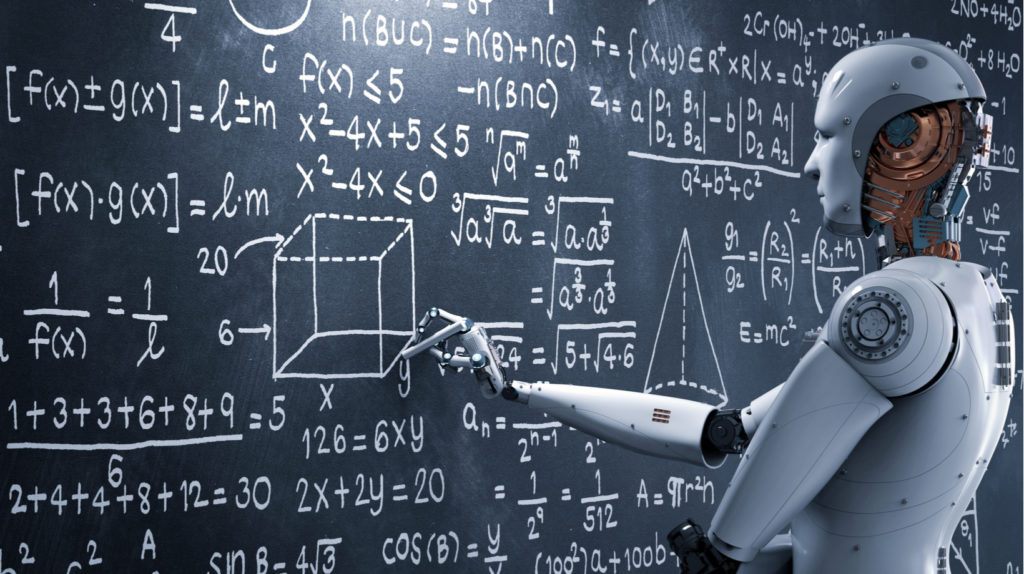
This innovative puzzle-solving program employed two distinct methods for pathfinding. One approach involved randomly distributing blocks, which offered no significant learning opportunities for the AI. The second method incorporated historical struggle data to dynamically increase the puzzle’s difficulty, often rendering the path excessively challenging, and occasionally, impossible for the AI to solve.
To overcome these limitations, scientists developed a novel methodology termed “PAIRED”. This approach involved two identical AI agents, differing only slightly in their capabilities: a new “antagonist” and an existing “protagonist.” They then crafted a puzzle environment designed to be solvable for the antagonist but significantly challenging for the protagonist. These two agents were then integrated into a neural network—a computational model inspired by the human brain—to learn and refine their task over numerous trials.
While previous methods resulted in AI resolving no mazes, PAIRED training dramatically improved performance, enabling the AI to solve one in five mazes, as reported by the team at the prestigious Conference on Neural Information Processing Systems (NeurIPS).
“PAIRED Showed Immediate Promise,” Says Dennis
Furthermore, the PAIRED methodology allowed Jaques and her colleagues at Google to develop an AI capable of successfully completing web forms and booking flights approximately 50% of the time, a task where traditional methods almost consistently failed.
Google’s Landmark Self-Teaching AI: AlphaGo Zero
Google has also achieved significant success in developing self-teaching AI. DeepMind, Google’s renowned AI division, introduced AlphaGo Zero, an incredibly advanced system that assimilated millennia of human knowledge in the game of Go within a mere few days.
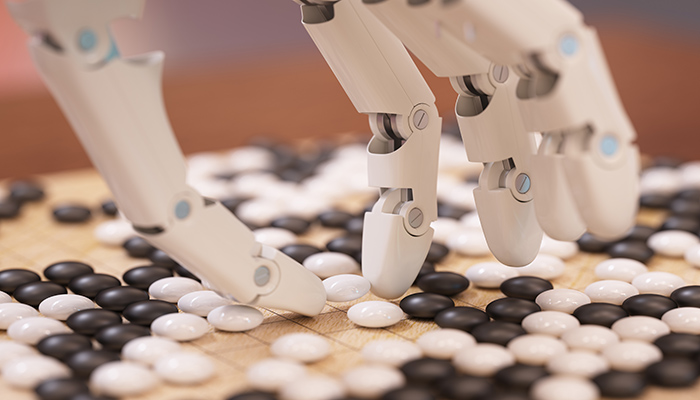
AlphaGo Zero stands as the most sophisticated and intelligent program ever developed by DeepMind, unbound by the limitations of human knowledge.
This latest iteration of AlphaGo achieved a monumental victory by defeating Lee Sedol, the 18-time world champion of Go. The fascinating journey of DeepMind’s development of this remarkable program and the thrilling details of the match are chronicled in “AlphaGo,” a 90-minute documentary released on Netflix. This film offers an insightful look into how the DeepMind team refined the program to master this ancient Chinese board game, which boasts more potential configurations than there are atoms in the observable universe.
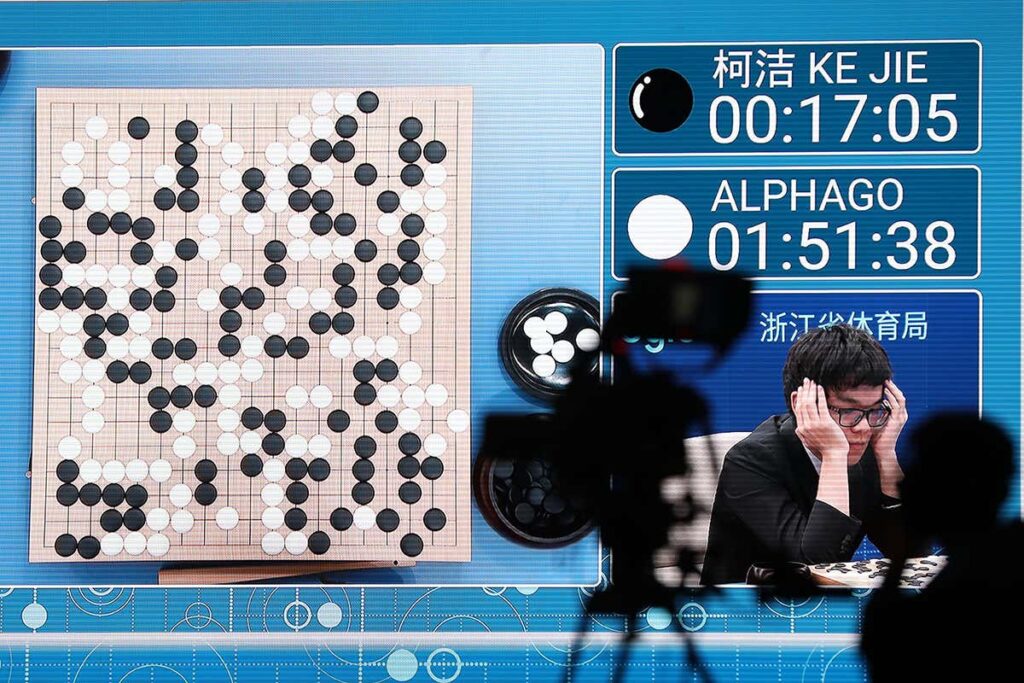
During one pivotal moment, AlphaGo executed a move that Go experts deemed utterly unprecedented by any human player, suggesting the computer had generated “something original.” The even greater surprise was that this strategic move was not a result of human instruction; the program had entirely taught itself.
Also read : AI recreates ancient sculptures & statues including Jesus’ Face
The Mechanics of Self-Programming AI Learning
Consider AlphaGo Zero’s evolution: its precursor, AlphaGo, initially struggled against champion players because it was trained by observing thousands of human moves, thus mimicking human play. While Master Lee was confident in his ability to defeat the AI, AlphaGo Zero presented a far greater challenge to the world champion. This was because Zero engaged in countless games against its own past versions, meticulously recording successful strategies and discarding ineffective ones. In essence, this AI learned and grew stronger by continuously competing against its own prior experiences. This marks a profound shift: initially, humans created and instructed Artificial Intelligence; now, AI is actively teaching humans.
Don’t miss this to read: Batteries built by Viruses could be the Future of Battery Tech
Practical Applications of Self-Teaching AI
The advancements in self-teaching AI hold immense potential, accelerating learning processes in areas like autonomous vehicles and domestic robots, and aiding in the resolution of intricate mathematical challenges. As AI increasingly shapes our future, the technological scope and demand are rapidly expanding, particularly with the rise of third-generation AI. This iteration of AI leverages neural networks to interpret and abstract information, thereby automating complex tasks. Notably, self-teaching AI is intrinsically linked to neuromorphic computing, a cutting-edge field in computer science.
Humans are congenially co-axed with upgrading & improvement and so, are never satisfied!
For further reading and information, consult the following sources:
- https://www.sciencemag.org/news/2021/01/who-needs-teacher-artificial-intelligence-designs-lesson-plans-itself?utm_campaign=news_daily_2021-01-21&et_rid=724899974&et_cid=3638651
- https://www.independent.co.uk/life-style/gadgets-and-tech/news/alphago-zero-go-deepmind-ai-artificial-intelligence-google-machine-learning-human-knowledge-a8009801.html
- https://www.livemint.com/Leisure/vtiKX8KtqZ97zjbB3M2q3N/Teaching-Artificial-Intelligence-to-teach-itself.html
Join our community by subscribing to our Weekly Newsletter to stay updated on the latest AI updates and technologies, including the tips and how-to guides. (Also, follow us on Instagram (@inner_detail) for more updates in your feed).
(For more such interesting informational, technology and innovation stuffs, keep reading The Inner Detail).