
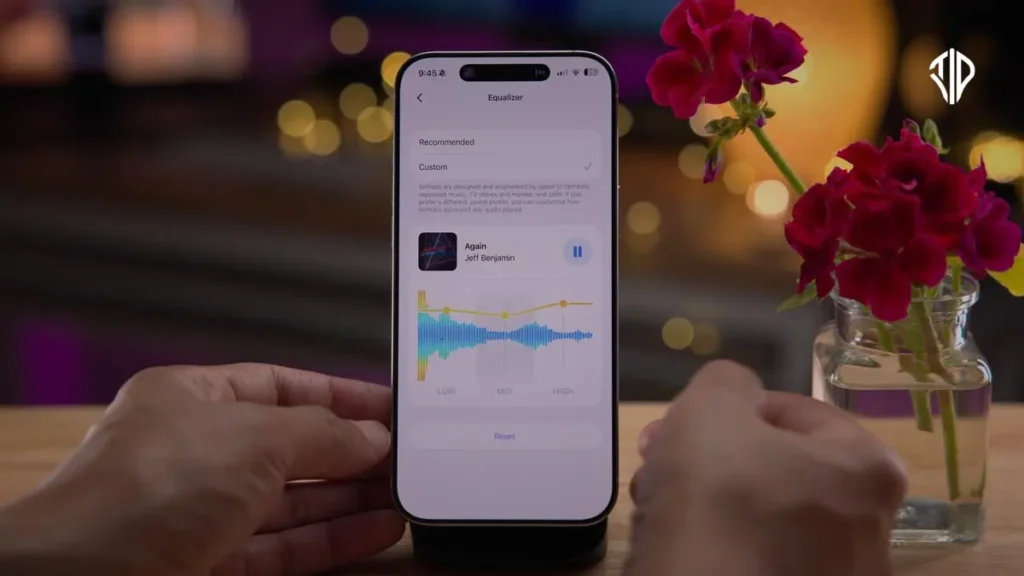
Apple Introduces Custom Equalizer for AirPods
Apple has rolled out a new software update for supported AirPods models that introduces a feature users have requested for years. The latest firmware brings a built-in custom equalizer directly to Apple’s popular wireless audio lineup.
Key Takeaways
- The new firmware introduces a built-in custom three-band equalizer for supported AirPods models.
- Users can adjust lows, mids, and highs directly within the iOS Settings app with a live preview feature.
- The update is compatible with H2 chip models, including AirPods Pro 2, AirPods Pro 3, AirPods 4, and AirPods Max 2.
- The update also reorganizes the AirPods settings menu to separate controls for hearing health, location tracking, and audio routing.
How the Custom EQ Works
Alongside updates like redesigned settings interfaces and new software capabilities, this firmware update gives listeners more control over their sound profiles without needing third-party applications.
The custom EQ feature functions as a straightforward three-band equalizer.
Within the iOS Settings app, users can adjust lows, mids, and highs to fit their listening preferences for music, podcasts, and movies.
Apple includes a live preview feature that allows listeners to play music directly from Apple Music inside the settings menu to test adjustments in real time.
Compatibility and Installation
The update is compatible with AirPods models featuring the H2 chip, including the AirPods Pro 2, AirPods Pro 3, AirPods 4, and AirPods Max 2.
Firmware updates for AirPods typically install automatically when the earbuds are charging and within Bluetooth range of a connected Apple device on Wi-Fi.
Users can verify their current firmware version by navigating to the Bluetooth menu within the iOS Settings app.
Broader Ecosystem Changes
In addition to custom EQ, the software release accompanies broader ecosystem changes designed to improve how users manage their accessories.
The iOS Settings app features a reorganized AirPods menu that separates controls for hearing health, location tracking, and audio routing.
These updates reflect a broader push by Apple to give users deeper customization options across hardware and software ecosystems.
While many listeners will likely stick with Apple’s default tuning, the addition of custom EQ provides a welcome tool for audiophiles and casual users alike.
Join our community by subscribing to our Weekly Newsletter to stay updated on the latest AI updates and technologies, including the tips and how-to guides.
(Also, follow us on Instagram (@tid_technology) for more updates in your feed and our WhatsApp Channel to get daily news straight to your Messaging App).
