
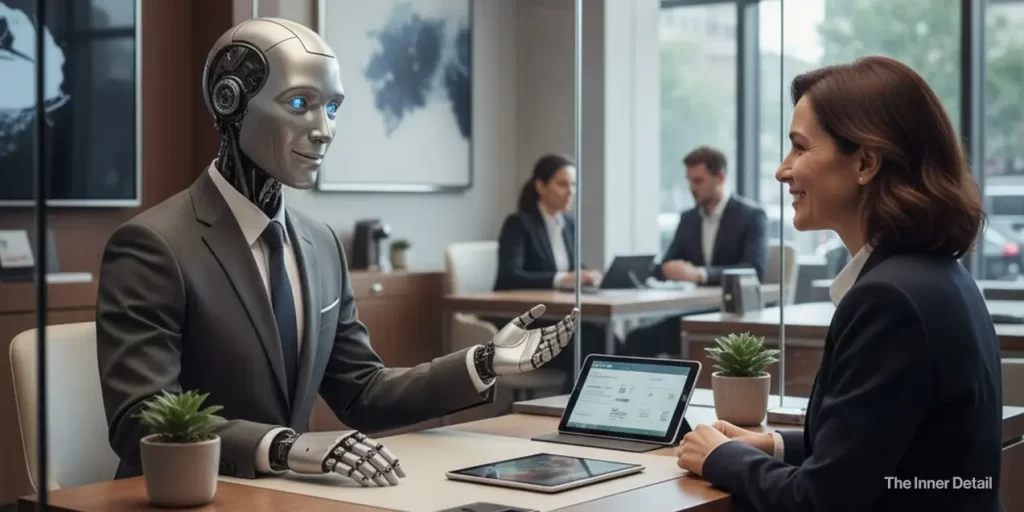
The workplace of 2026 is no longer defined by the tools we use, but by the digital partners we manage. We have officially moved past the era of “AI as a novelty” and entered the age of the Human-AI Hybrid Workforce, where the most successful professionals are those who have traded manual execution for high-level orchestration.
Whether you are a developer using agentic IDEs to build software or a financial analyst using autonomous models to simulate market risks, the fundamental unit of work has changed. This guide explores how to navigate this new landscape—shifting your role from a task-doer to a strategic conductor—and identifies the essential skills required to remain indispensable in an increasingly automated world.
1. From “Tool Users” to “AI Orchestrators”
The primary shift in 2026 is the move from simple task execution to orchestration. In previous years, we used AI to write an email or generate an image. Today, high-value workers are managing entire “agentic workflows.”
According to reports from PwC and IDC, leading organizations are now deploying multiple specialized AI agents that interact with each other to complete complex projects. As a human collaborator, your role is to act as the “conductor”—defining the intent, connecting the right agents (such as using Anthropic’s MCP to bridge data between Slack and GitHub), and auditing the final output for strategic alignment.
2. The Rise of Hybrid “Agentic” Teams
By 2026, roughly 40% of roles in major global enterprises involve direct daily engagement with AI agents. These agents are no longer just chatbots; they are invisible teammates performing operations like talent scouting, automated scheduling, and real-time data scoring.
In these hybrid teams, the workflow usually follows a “Co-pilot” or “Human-in-the-Loop” model:
- AI Execution: AI handles the high-frequency, data-heavy tasks like summarizing 500-page documents or running Monte Carlo simulations for financial risk.
- Human Judgment: The human provides the “contextual override.” You apply the empathy, ethics, and “taste” that a model cannot replicate. For example, in HR, AI might score candidates based on skills, but a human makes the final hire based on cultural nuance and team chemistry.
3. Essential Skills for the 2026 Workforce
To stay competitive, the “bare minimum” has shifted. AI Literacy is now a foundational requirement, similar to basic computer literacy in the 2000s.
- Systems Thinking: Instead of thinking about “how do I do this task?”, you must think about “how do I build a repeatable system where AI handles the execution?”.
- Data Interpretation: You don’t need to be a data scientist, but you must be able to read AI-generated dashboards, spot anomalies, and understand why an AI made a specific recommendation.
- Prompt Architecture: Basic prompting has been replaced by structured “Prompt Frameworks.” Professionals now use auditable, multi-step prompts that reflect company values and regulatory compliance.
4. Avoiding the “Efficiency Trap”
A major risk in the hybrid workforce is over-reliance. The World Economic Forum warns of “critical-thinking atrophy,” where 50% of organizations may soon require “AI-free” skills assessments to ensure employees haven’t lost their ability to solve problems without a screen.
The most valuable node in any intelligent network is still the human. To avoid the efficiency trap, follow the “Evidence Requirement” rule: for any high-impact AI output, always require “retrieval traces” or cited sources to verify that the agent hasn’t hallucinated or missed a key policy change.
The Human-AI Division of Labor (2026)
| Task Category | AI Responsibility | Human Responsibility |
|---|---|---|
| Research | Aggregating data from millions of sources | Fact-checking & identifying “truth” |
| Creativity | Generating 50 initial mockups/drafts | Selecting the best “vibe” and refining |
| Operations | Scheduling, follow-ups, & status checks | Handling complex interpersonal conflicts |
| Decision Making | Modeling future scenarios & risk scores | Final approval & ethical accountability |
| Coding | Writing boilerplate & debugging syntax | Architectural design & logic oversight |
Your Competitive Edge
In 2026, AI provides the speed and scale, but humans provide the trust and premium value. The winners of this era are not the ones who hide from the technology, but the ones who treat it as a “force multiplier” for their own ambition.
By moving away from manual execution and toward high-level orchestration, you can reclaim up to 40% of your workday—time that can be spent on the strategic decisions that actually move the needle.
Key Takeaways
- Professional roles have transitioned from manual execution to high-level strategic orchestration.
- The “Human-in-the-Loop” model is essential for maintaining ethical standards and cultural nuance.
- AI Literacy, Systems Thinking, and Prompt Architecture are the mandatory skill sets for 2026.
- Strategic use of AI can reclaim up to 40% of the workday for high-value decision-making.
Join our community by subscribing to our Weekly Newsletter to stay updated on the latest AI updates and technologies, including the tips and how-to guides. (Also, follow us on Instagram (@tid_technology) for more updates in your feed and our WhatsApp Channel to get daily news straight to your Messaging App).
